REVIEW · MYKONOS
Mykonos Market Tour & Brunch Cooking Class with a Local, Angelina
Book on Viator →Operated by Traveling Spoon · Bookable on Viator
Mykonos tastes better when it’s personal. This private brunch cooking class with Angelina is built around a homey meze welcome, hands-on prep, and a shared Greek coffee finish. I especially like that you learn the building blocks (like the tomato base) and not just how to follow steps, and that the meal ends as a sit-down brunch you enjoy with your host. One thing to weigh: you do need to walk about 5–10 minutes from the sea bus or taxi drop-off to reach Angelina’s home.
In This Review
- What makes it work (and who it’s for)
- Key highlights worth planning for
- A private brunch lesson in Mykonos home kitchens
- From meze welcome to Greek coffee: your 3-hour flow
- The tomato base that powers kagiana eggs and mostra
- Feta parcels with thyme honey and pink peppercorns
- Spanakopitas and sausage wraps: choose fillings with season in mind
- The shared brunch plate: giouvetsi or shrimps saganaki plus baklava
- Alcohol and the Mykonos flavor finish
- Market + cooking option: when shopping first actually helps
- Price and value: $326 for a private, taught-brunch meal
- Who should book Angelina’s Mykonos brunch class?
- Should you book this? My practical call
- FAQ
- How long is the Mykonos Market Tour & Brunch Cooking Class?
- Is this a private tour?
- What time does it start?
- Is hotel pickup included?
- What’s included with the meal and drinks?
- Where do we meet, and is the home easy to reach?
- Is there an optional market tour?
What makes it work (and who it’s for)
You’ll start with olives, cheeses (including Myconian gruyere), louza, and local sausage, plus tea or fresh juice, then move into Angelina’s small kitchen for a practical lesson. The value is strong if you want a guided, intimate way to understand Greek flavors—especially Mykonos favorites like mostra with kopanisti cheese, olive oil, capers, and tomato. If you prefer a huge group “production” with lots of sightseeing stops, this won’t feel like that. It’s all about the cooking and the conversation.
Key highlights worth planning for
- Meze first, cooking second: you’ll begin at Angelina’s home with olives, cheeses, louza, and a cold herbal tea or fresh juice
- Tomato base you’ll reuse: Angelina shows how tomatoes become the start of multiple dishes, including kagiana eggs and mostra
- Feta parcels in filo: you’ll assemble cheese-wrapped filo that goes straight to the oven
- Spanakopita choices based on what’s in season: spinach pies use spinach when available, and there are other filling options too
- Wine or local beer included: a glass of wine or a bottle of Mikonu beer comes with the meal
- Optional market time: if you pick the market + cooking option, you can shop fresh ingredients before you cook
You can also read our reviews of more tours and experiences in Mykonos.

A private brunch lesson in Mykonos home kitchens
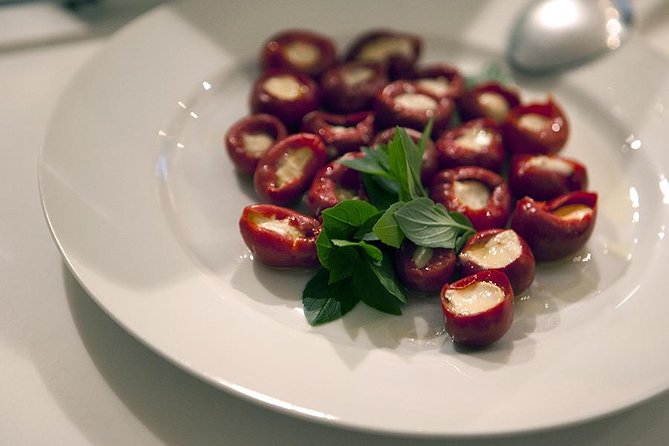
Mykonos can be loud in the “see and be seen” zones. This experience offers a quieter alternative: a cooking class that starts at a local home instead of a crowded demo space. You get a real sense of how Greek brunch can be both casual and seriously flavorful—meze on the table, warm baked pastries, and coffee to close the meal.
I like that the class is private, so you’re not squeezed into a big group where you watch more than you do. The pace feels suited to learning—hands on, questions welcome, and you leave with dishes you can actually recreate. And because Angelina is your host, the lesson tends to feel like food plus stories, not just technique.
You should also know what this is not. It’s not a long excursion across the island. It’s a focused 3-hour experience centered on cooking, eating, and enjoying a local finish—Greek coffee and a spoon sweet (those little preserved-fruit treats that Greeks love after a meal).
From meze welcome to Greek coffee: your 3-hour flow
The timing is simple and meal-shaped. You meet at Vegera Restaurant Cafe Bar near the Old Port (Cyclades, Akti Kampani, Mikonos 846 00), with a 10:00 am start. The experience ends back at the same meeting point, and while the start is easy to reach, the home is a short walk: expect about 5–10 minutes on foot from the sea bus or taxi drop-off.
Once you arrive at Angelina’s home, you don’t jump straight to chopping. You begin with a small meze table. That matters, because it sets the frame for what you’ll cook later: Mykonos flavors built on cheeses, cured meats, herbs, and olive oil, all coming together with tomatoes and pastry.
Here’s how the lesson generally feels once you’re seated at the meze:
- You’ll have olives and cheese, including Myconian gruyere
- There’s cold herbal tea or fresh fruit juice
- You may see louza (local prosciutto-style meat) plus an exquisite Myconian sausage
- After settling in, you head to the kitchen to start cooking
Then you move through a sequence of tasks that build on each other. You’ll make tomatoes for multiple dishes, assemble pastries, bake filo parcels, wrap smaller spanakopita-style items, and finish with shared brunch plates plus dessert (baklava). You’ll close with Greek coffee and a spoon sweet. Add in a glass of wine or local beer, and it feels like a full brunch event, not a snack-only workshop.
The tomato base that powers kagiana eggs and mostra
If you want one skill that pays off later, this is it. Angelina teaches you how to prepare tomatoes for both the main savory dish and the dish that functions a bit like Mykonos-style bruschetta.
You’ll work on the tomato preparation that becomes:
- The base for kagiana eggs (a tomato-and-egg style dish)
- The tomato component for mostra, which is Mykonos’s take on bruschetta, served with kopanisti cheese, olive oil, capers, and tomato
This is where the class becomes more than following steps. Tomatoes are not just an ingredient here—they’re the flavor engine. You’re learning how the tomato component is built so it works with dairy (cheese), salty elements (capers and meats), and eggs or baked pastry.
Practical tip for you: if you’re the kind of cook who gets overwhelmed by lots of recipes, focus on the tomato base first. Even if you never make every pastry at home, recreating a good tomato base is a shortcut to tasting like Greece.
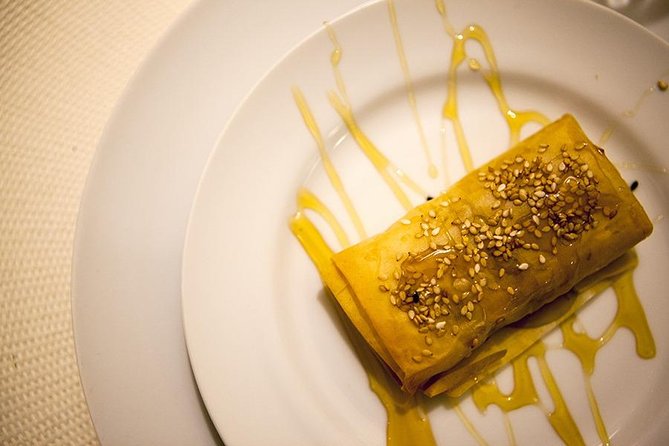
Feta parcels with thyme honey and pink peppercorns
Next come the feta parcels—cheese wrapped in filo that bakes in the oven. This is the kind of dish where technique matters, but you’re not expected to be a professional pastry maker. Angelina guides you through assembling the parcels, and you get to see how filo turns flaky and golden with baking.
These parcels are paired with flavors that make them pop:
- thyme honey
- pink peppercorns
That combo gives a sweet-savory contrast and a gentle peppery hit. It also shows you something useful: Greek brunch doesn’t rely only on salt and herbs. A little sweetness—like thyme honey—can balance the richness of cheese and help the whole plate feel complete.
If you’re cooking for family, this is also the easiest way to “teach” someone Greek flavors. You can explain the idea of filo parcels and adapt fillings later, but the feta + filo method is memorable and repeatable.

Spanakopitas and sausage wraps: choose fillings with season in mind
During the lesson, you’ll wrap smaller pastries in the style of spanakopitas (spinach pies), but the exact filling can shift depending on what’s available. If spinach is in season, you’ll do feta and spinach with fine herbs. If it’s not, you’ll use other options—one of them includes minced sausage with green olives.
That flexibility is worth paying attention to. It’s a reminder that Greek cooking often adjusts to season and access, not a fixed menu no matter what. You’re learning an approach: how to wrap, balance, and fill so the pastry bakes up cohesive and flavorful.
Why this matters for your home cooking: if you follow recipes too strictly, you can get stuck when ingredients change. This class gives you a framework where you can swap fillings without losing the “Greek brunch” character.
Also, wrapping small pastries tends to feel satisfying. It’s hands-on, a little rhythmic, and it breaks up the earlier tomato work so you don’t feel like you’re stuck on one task the entire time.
The shared brunch plate: giouvetsi or shrimps saganaki plus baklava
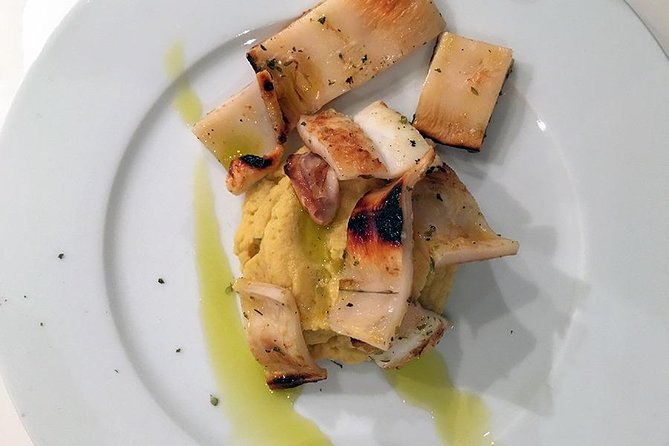
After you’ve assembled the dishes, you share the meal you helped prepare with Angelina. The table includes yogurt, fresh fruits, and honey, which helps round out the savory food with something cool and lightly sweet.
For the main, the sample menu includes two popular options:
- Chicken cooked in fresh tomato sauce with orzo (giouvetsi)
- Shrimps saganaki cooked in fresh tomato sauce with feta
Dessert is baklava—the sweet, flaky closer that signals you’re done with the cooking and ready for the relaxed part of brunch.
Even if you’re not a “dessert person,” baklava is useful here because it’s part of the full Greek meal pattern. You’re seeing how brunch moves from savory to sweet without weird gaps.
Alcohol and the Mykonos flavor finish
A glass of wine or a bottle of local beer (Mikonu) is included with the meal. For many people, that’s the right size of an upgrade: enough to make the brunch feel like an event, not enough to derail the morning.
The class ends with Greek coffee and a spoon sweet. This is a real cultural touch that many cooking experiences skip. It’s also practical: it gives you a predictable finishing ritual so the whole experience feels complete, not cut off right after dessert.
One note to plan for: Greek coffee can be strong. If you’re sensitive, just sip slowly and pair it with the sweet at the end.
Market + cooking option: when shopping first actually helps
If you choose the market + cooking grade option, you’ll add a farmers’ market stroll where you can shop for fresh ingredients. This makes sense if you like two things:
1) picking ingredients with guidance
2) connecting what you buy to what you cook
The catch: the tour is still about a 3-hour experience, so adding market time means you’ll likely have less “free time” than a longer excursion. If your main goal is hands-on cooking and eating, the cooking class alone may feel like the cleanest fit.
If your goal is ingredient knowledge—how tomatoes, herbs, and fillings translate into brunch—then market time can add value.
Price and value: $326 for a private, taught-brunch meal
At $326 per person, this isn’t a budget activity. But it also isn’t priced like a big group show. This price is for a private host-led class with Angelina, a full meze welcome, hands-on cooking, and a meal that ends with dessert and Greek coffee.
Where the value really lands:
- Private attention: you’re not fighting for space or waiting your turn in a crowd
- Ingredient-to-dish learning: tomatoes power multiple dishes (kagiana eggs and mostra)
- You eat what you make: the lesson isn’t separate from the meal
- Included extras: alcohol (wine or Mikonu beer), plus baklava, yogurt, fruits, honey
If you compare this to a restaurant meal, you’re basically paying for instruction, technique, and a local host experience. If you already know you’ll enjoy cooking classes, it’s a strong deal. If you’re not that into hands-on food or you’d rather sightsee for the same time, then you might feel the cost more than the cooking.
Who should book Angelina’s Mykonos brunch class?
This is a great fit if you:
- want a break from Mykonos crowds and prefer a smaller, local setting
- enjoy cooking and want to learn how a few key components work (tomatoes, filo parcels, wrapping techniques)
- like eating as part of the experience, not just watching
- travel with kids or family members who can participate at a comfortable pace (the experience has been described as accommodating for younger guests)
It’s also ideal if you’re the type who likes to take home a few repeatable skills. Even if you only bring home the tomato base idea, that’s a practical win.
You might skip it if you:
- hate cooking classes in general
- want a large itinerary with lots of different places
- only want sightseeing time and no kitchen work
Should you book this? My practical call
Book it if you’re craving a Mykonos experience that feels local, personal, and edible. The structure makes sense: meze first, core tomato prep that drives multiple dishes, hands-on assembly of feta parcels and small pies, then a shared brunch plate with baklava and Greek coffee. For many people, that combination is exactly what they came to Greece for—food knowledge with a real human host.
Pass if you’re mainly chasing photo stops or beach time and don’t want to spend your morning in someone’s kitchen. Also think about timing: with a 10:00 am start and a short walk from the drop-off, it helps to plan your arrival so you’re not rushing.
FAQ
How long is the Mykonos Market Tour & Brunch Cooking Class?
It’s about 3 hours.
Is this a private tour?
Yes. It’s private, and only your group participates.
What time does it start?
It starts at 10:00 am.
Is hotel pickup included?
No. Hotel pickup and drop-off are not included.
What’s included with the meal and drinks?
You get local alcoholic beverages, either a glass of wine or local beer (Mikonu). The experience also includes the dishes you cook and dessert (baklava), plus Greek coffee and a spoon sweet.
Where do we meet, and is the home easy to reach?
You meet at Vegera Restaurant Cafe Bar near the Old Port. From the sea bus or taxi drop-off, you’ll walk about 5–10 minutes to Angelina’s home.
Is there an optional market tour?
Yes. If you choose the market + cooking option, it includes a farmers’ market stroll to shop for fresh ingredients.