REVIEW · MYKONOS
From Mykonos: Ancient Delos Tour
Book on GetYourGuide →Operated by Mykonos Excursions · Bookable on GetYourGuide
Delos turns mythology into real street corners. On this 4-hour outing, you see why Ancient Delos mattered as a trade hub and religious center, from the Sacred Way to the Temple of Apollo. It’s one of those places where a good guide makes the stones feel like a living story.
What I like most is the tight, focused walk: you cover the Agora, markets, and key sanctuaries without feeling lost or overwhelmed. I also love that you get time at the museum of Delos, so you can connect what you just saw outdoors with artifacts from multiple eras.
The main consideration is the sun and walking. Delos is not shady, and you’ll want comfortable shoes plus water and sun protection, because the tour schedule moves and you can’t rely on long breaks.
In This Review
- Key things to know before you go
- Why Delos feels different from other ruins in Greece
- Getting from Mykonos to Delos: pickup, ferry, and the Old Port meeting point
- Your guided walk: Agora, markets, and the story of a city
- The Sacred Way and the Temple of Apollo: where the myth has a route
- Sanctuary of Artemis and the Terrace of the Lions
- Museum of Delos: artifacts that turn ruins into a daily life story
- Timing that keeps you moving: when to plan water and photos
- Price and value: what $94 really covers (and what to add)
- The guide can make or break Delos: what you’ll want to listen for
- Practical rules: who this tour fits best
- Common snag to avoid: finding the exact meeting church
- Should you book this Ancient Delos tour from Mykonos?
- FAQ
- How long is the Delos tour from Mykonos?
- What time do I get picked up in Mykonos?
- Where is the meeting point?
- Are boat tickets to Delos included?
- Is the Delos archaeological site and museum entrance fee included?
- Do I need a Whisper Guide System?
- What language is the tour guide?
- What should I bring for the visit?
- Can children join this tour?
- Is free cancellation available?
- Are pets allowed on the tour?
Key things to know before you go
- Apollo and Artemis sites: You visit major sanctuaries tied to the islands’ most famous myths.
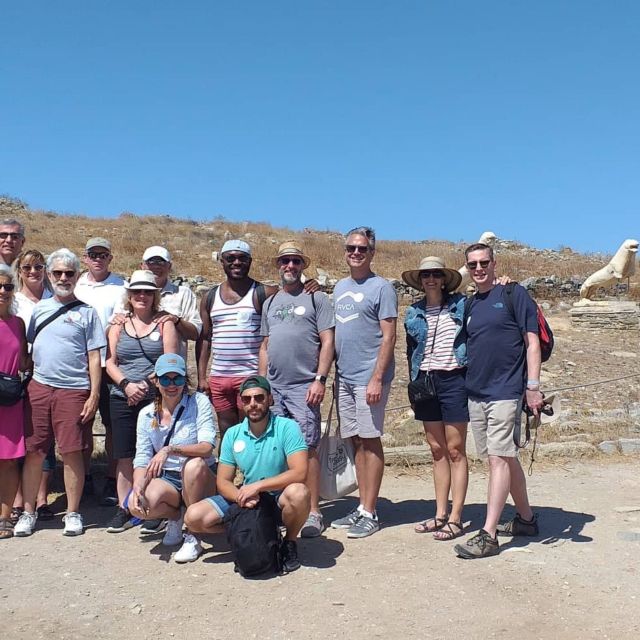
- Terrace of the Lions: Expect the iconic lions that once guarded the Sacred Way (roughly 9 to 12 statues).
- Agora + public squares: You don’t just pose for photos; you follow how the city worked.
- Museum time: You’ll see excavated finds spanning Archaic through Roman periods, plus everyday objects.
- Sun + timing: You have photo freedom, but you’re still on a set return window.
- Local operating rules: A Whisper System is required, and entrance fees are extra.
Why Delos feels different from other ruins in Greece
Delos doesn’t feel like a distant “archaeology stop.” It feels like a city plan you can actually read—streets, sacred routes, sanctuaries, and public space in one coherent walk. And the myth layer is hard to ignore: you’re going to sites associated with Apollo and Artemis, so your brain keeps connecting the poetry to physical places.
I especially liked how the tour connects the practical and the spiritual. Delos wasn’t only about worship; it was also about commerce and movement, which helps the Agora and market areas make sense. When you understand that trade and religion were intertwined here, the ruins stop being random and start behaving like a real place.
You can also read our reviews of more tours and experiences in Mykonos.


Getting from Mykonos to Delos: pickup, ferry, and the Old Port meeting point
Your day starts with pickup around 9:15 from your hotel, then a transfer to the old port of Mykonos. You’ll meet your guide at St. Nikolas Church, Old Port, which is important because the “Old Port” area can be a little confusing if you’re arriving on your own timing.
From there, you take the ferry to Delos. If you’ve ever been on a windy Aegean crossing, you already know what to expect—pack layers you can tolerate when the wind hits. One simple tip: bring a light jacket even in warmer months, since fast winds can make the boat ride feel cooler than you planned.
The boat part is short compared to the time on the island, but it sets the tone. You’ll arrive ready to walk, and the schedule is built so you’re not spending half your day in transit.
Your guided walk: Agora, markets, and the story of a city
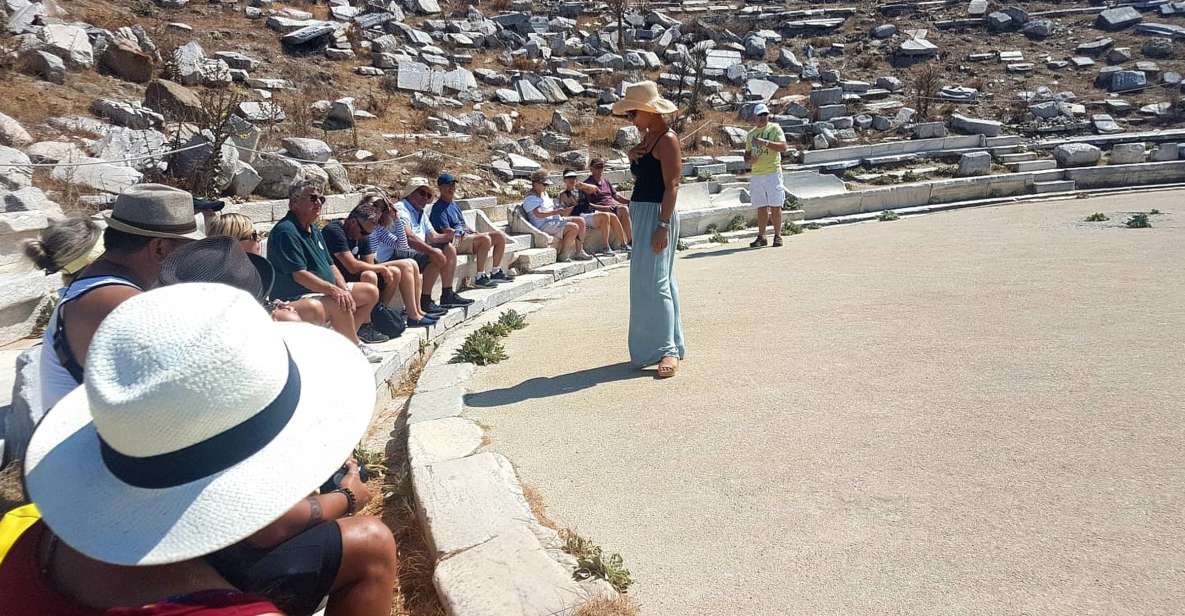
Once on Delos, the guided portion is about understanding the city layout and how people moved through it. You’ll go through areas that functioned as public space—marketplaces and squares—so the ruins don’t just look dramatic; they look useful.
The Agora stop matters more than it sounds. In many Greek sites, you can visit sanctuaries and temples and still miss how everyday life worked. Here, the city center helps you picture merchants, visitors, and residents sharing the same paths that pilgrims later used for worship.
As you walk, your guide ties the stones to the culture: what the spaces were for, what kinds of activity would have filled them, and why the site mattered between roughly the 8th and 1st centuries BCE. Even if you’re not a classic-leaning bookworm, this is the kind of grounding that makes the big monuments land harder.
The Sacred Way and the Temple of Apollo: where the myth has a route
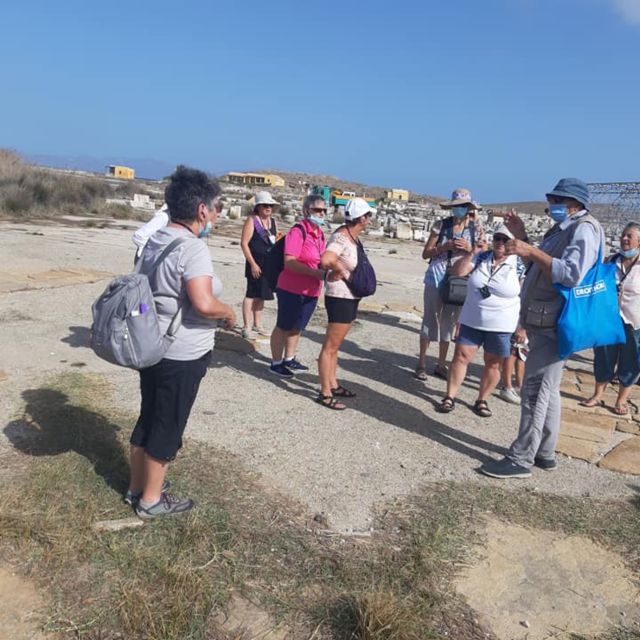
One of the most satisfying parts of the day is following the Sacred Way toward major religious landmarks. The Sacred Way isn’t just a name you hear once; it becomes a route you walk, so you can feel the connection between procession, devotion, and physical space.
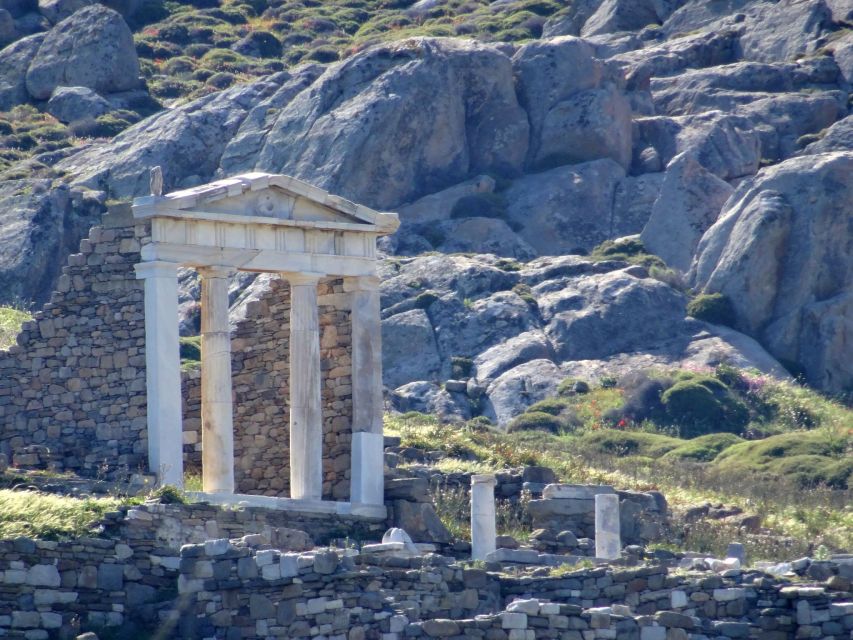
You’ll also see the Temple of Apollo, one of the anchor points for the island’s fame. This is where the tour’s theme becomes real: Apollo isn’t just a figure in a storybook, because the temple and sanctuary environment are designed for ritual and meaning.
What makes this stop work well is the pacing. The guide keeps the walk moving through key points, so you’re not stuck in long technical explanations. It’s history plus interpretation, with enough structure that the city feels like one connected experience rather than a list of monuments.
Sanctuary of Artemis and the Terrace of the Lions
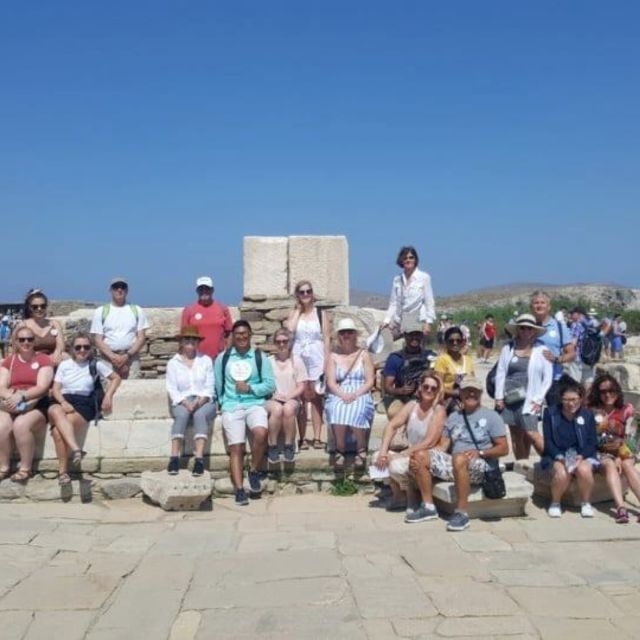
The tour’s religion-and-myth theme continues at the Sanctuary of Artemis. You’re walking among places tied directly to the island’s sacred identity, and that context helps the carvings, columns, and layouts read like more than just stone fragments.
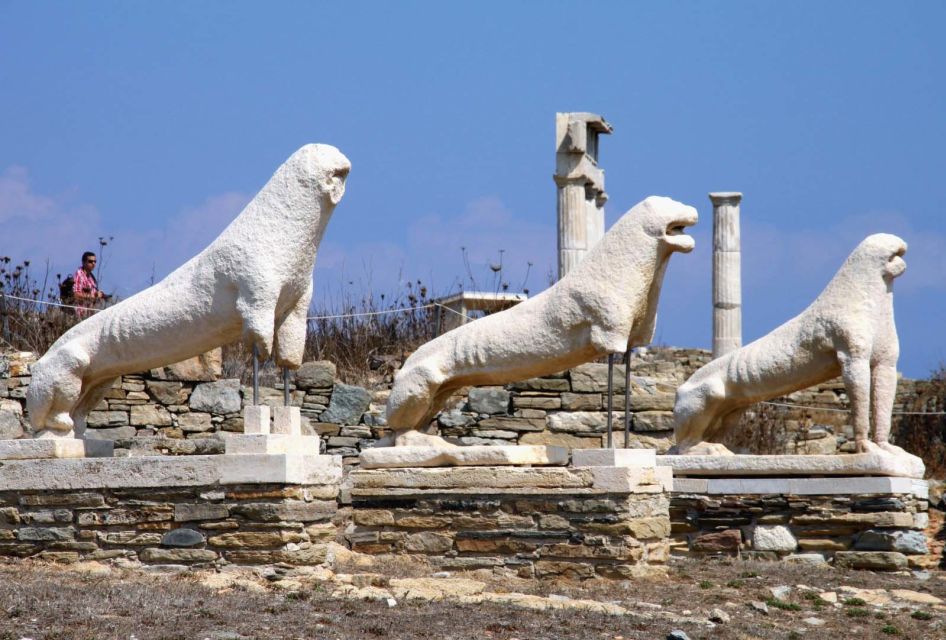
Then comes the iconic Terrace of the Lions. This is the dramatic photo moment that also has real historical weight: the lions once guarded the Sacred Way, and the statues are often described as roughly 9 to 12 marble lions. Standing there, you can understand why this route symbolized power and protection as people moved toward the sacred core.
It’s also a great spot to pause, look back at the path you just followed, and connect the dots between temple spaces and myth narratives. If you’re into symbolism, this part is especially rewarding.


Museum of Delos: artifacts that turn ruins into a daily life story
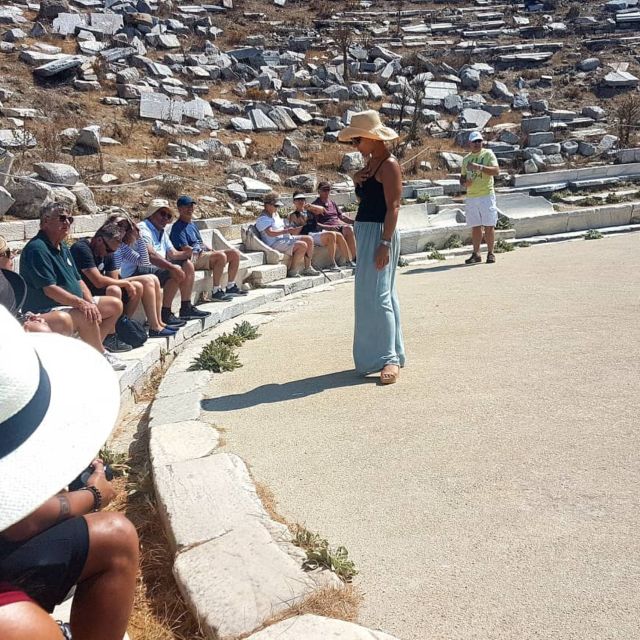
After the outdoor highlights, you move to the Archaeological Museum of Delos. You get about 1.5 hours here, which is just enough time to look carefully without feeling stuck.
The museum portion is valuable because it fills in the gaps. Outdoors you see major architecture and site layout. Indoors you get sculptures and objects excavated over centuries, with pieces from Archaic, Classical, Hellenistic, and Roman eras.
You’ll also see vessels from all periods and small items connected to everyday life. That last part is sneaky-important. It helps you picture what visitors and locals actually used, not just what elites displayed. Even if you skim, those details add texture to what you saw on the walk.
One practical note: the museum can sometimes have operational changes. If the museum isn’t fully available on your day, the guide may adjust time on the island so you still get substantial viewing opportunities.
Timing that keeps you moving: when to plan water and photos
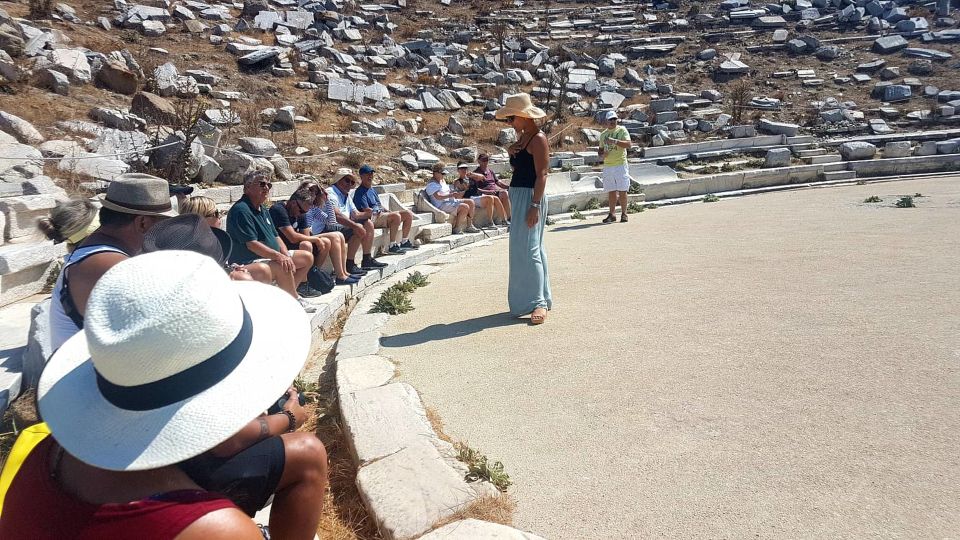
The whole experience is about 4 hours, including transfers to and from your hotel or port. On Delos, the guided segment is about 1.5 hours, followed by museum time, a refreshment stop at the café next to the museum, and then some free time for photos.
Your tour aims to depart Delos around 13:30, so the island won’t feel like a slow, lingering picnic. That’s not a dealbreaker. It’s actually what makes Delos work as a day trip from Mykonos—efficient, structured, and still packed with major points.
Here’s the real-life takeaway: plan for heat and limited shade. The site has no shade to rely on, so you should bring water, a hat, and sun protection. Comfortable shoes aren’t just recommended; they make the difference between enjoying the walk and feeling irritated by it.
Also remember your “free time” is for photos, not for a long self-guided exploration. If there’s a single spot you want to linger at, do that quickly during the photo window.
Price and value: what $94 really covers (and what to add)
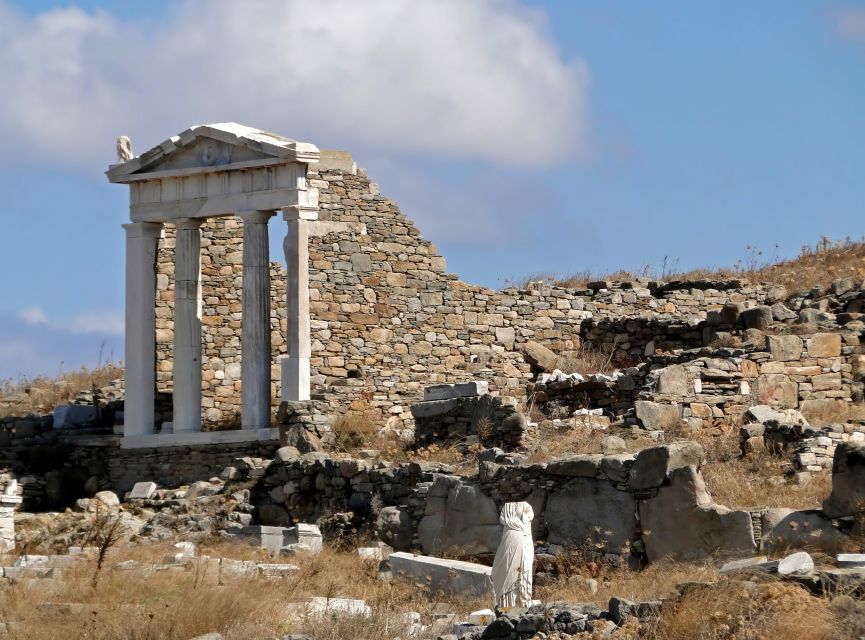
The headline price is listed at $94 per person for the 4-hour tour. That sounds straightforward, but to judge value you need to separate what’s included from what’s extra.
What’s included is a professional guide at Delos and boat tickets to Delos. That combination matters here because the guide experience is what turns scattered ruins into a coherent story, and the boat is a real cost you’d pay anyway if you went independently.
What’s not included is the Delos site and museum entrance fee (€20 per person) and the Whisper Guide System (€5 per person). You should also expect transfer surcharges if you’re staying in remote areas; the add-on can be €10 per person paid in cash on the spot for specific distant neighborhoods/villas.
So the smart way to budget is: start with the $94, add entrance fees, add the Whisper fee, and add the transfer add-on only if your hotel is in a remote zone. When you do that math, the tour still tends to feel fair—because you’re paying for guided structure and the ferry—not just for access to ruins.
The guide can make or break Delos: what you’ll want to listen for
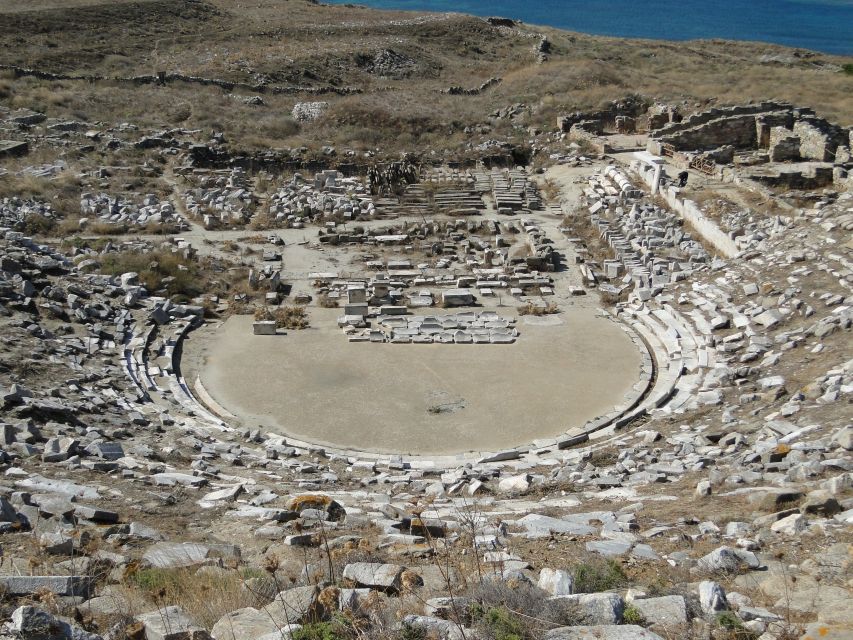
This tour is built around a live English guide at Delos, and multiple guides referenced in past groups were strong on myth and archaeology storytelling. Names that have come up include Alexandra, Angela, Barbara, and Iovana, and they’re repeatedly described as engaging and able to answer questions.
What that means for you: you’ll get help noticing what’s important. It’s easy to look at temples and think, “Cool, but why here?” A strong guide points out how each space fits into the island’s identity—religious purpose, civic life, and the role Delos played across different periods.
You’ll also benefit from the way the guide keeps the pacing sane. Some ruin tours wander; this one keeps you moving through the major points while still explaining enough to make the walk meaningful.
Practical rules: who this tour fits best
This experience is a good match if you want a structured Delos visit without planning the ferry and route yourself. You’ll walk a fair amount, so bring comfortable shoes and be ready for sun exposure.
A few important rules to note:
- No pets.
- Unaccompanied minors aren’t allowed.
- Children can join only if accompanied by an adult.
If your travel style is “tell me what I’m seeing,” this tour fits nicely. If your style is “I want to roam slowly and independently for hours,” you might feel slightly time-pressed, since the schedule is fixed and the free time is shorter.
Common snag to avoid: finding the exact meeting church
The most common real-world hassle is not the tour itself—it’s meeting up. The embarkation point is at St. Nikolas Church at the Old Port, but some people have trouble because the Old Port area can have multiple churches with similar references.
My advice is simple: arrive early and use your phone map to confirm you’re at the right St. Nikolas Church before you commit. If you’re tight on time, give yourself a buffer so you’re not stressing about whether you’re standing in the correct spot.
Also, be on time for the pickup sequence. Late arrivals can mean you miss content, and there’s no partial refund for missed portions.
Should you book this Ancient Delos tour from Mykonos?
Book it if you want the most efficient way to see Delos’s key sanctuaries and understand what you’re looking at. The combination of guided walking + museum time + ferry logistics is exactly what makes Delos work as a half-day add-on to Mykonos.
Skip or reconsider if you hate structured schedules or if you’re not up for sun-heavy walking with limited shade. Also, plan your budget for extras like €20 entrance fees and the €5 Whisper System, so you don’t get surprised at the last step.
For most people—especially first-timers to Delos—this is a high-value way to turn a short ferry trip into a memorable history stop.
FAQ
How long is the Delos tour from Mykonos?
The experience lasts about 4 hours total, including transfer time to and from your hotel or the port.
What time do I get picked up in Mykonos?
Pickup starts at approximately 9:15 from your hotel, depending on the selected option.
Where is the meeting point?
You meet at St. Nikolas Church, at the Old Port.
Are boat tickets to Delos included?
Yes. Boat tickets to Delos are included.
Is the Delos archaeological site and museum entrance fee included?
No. Entrance fees to the Delos archaeological site and museum are not included and cost €20 per person.
Do I need a Whisper Guide System?
Yes. A Whisper System is required, and it costs €5 per person.
What language is the tour guide?
The tour is in English.
What should I bring for the visit?
Bring comfortable shoes. You’ll be walking around an ancient site.
Can children join this tour?
Children can participate only if they are accompanied by an adult.
Is free cancellation available?
Yes. You can cancel up to 24 hours in advance for a full refund.
Are pets allowed on the tour?
No, pets are not allowed.