REVIEW · DELOS
From Mykonos Cruise Port: Afternoon Delos Guided Tour
Book on GetYourGuide →Operated by Delos Travel · Bookable on GetYourGuide
Delos feels like someone hit pause 2,000 years ago. This 4-hour afternoon tour uses efficient port hopping and a focused route so you can see the most important monuments without eating your whole day. You’ll walk through narrow ancient streets, then get time to explore on your own, with wireless guidance helping you keep track of what you’re looking at.
I particularly like two things. First, the guided time is built around the site’s showstoppers, including the House of Dionysus and its famous mosaics and wall paintings, plus the Theater of Delos. Second, the package value is strong because it includes the roundtrip boat/SeaBus, entrance fees for both the archaeological site and museum, and a guide in English.
One drawback to consider is timing: the tour is tight by design. If the group moves slowly or the guide spends extra time on explanations, the later “free time” can feel shorter than you expect, and that can squeeze museum visits.
In This Review
- Key highlights to expect
- Why Delos fits inside a 4-hour Mykonos afternoon
- Getting there: SeaBus hop, port switch, and the short sail
- The guided circuit on Delos: streets, Dionysus, mosaics, and the Theater
- Main street to sanctuary zone: Apollo, Colossus of Naxians, and the market area
- Museum visit vs. free time: how to avoid feeling rushed
- Free time strategy: make 45 minutes work for you
- Price and value: what $99 really buys (and what it doesn’t)
- Logistics you should know: English guidance, group rhythm, and pace
- Who this Delos tour suits best
- Should you book the Afternoon Delos Guided Tour?
- FAQ
- FAQ
- How long is the Delos tour from Mykonos?
- Where do I meet for the afternoon Delos guided tour?
- How do you get from Mykonos to Delos?
- Is the guided portion on Delos long?
- Do I get time to explore Delos on my own?
- Are entrance fees included?
- Is skip-the-line included?
- What language are the guides and audio in?
- Is food included in the tour price?
- What happens if the tour can’t run because of low participation?
Key highlights to expect

- House of Dionysus: mosaics, wall paintings, and the kind of details you miss if you just wander
- Wireless guide system: easier navigation and clearer listening while you’re moving through ruins
- Sanctuary zone walk: Apollo and the major landmarks along the main thoroughfare
- Theater of Delos: a big visual anchor that helps you understand the town’s layout
- Entrance fees included: archaeological site and museum access already built into the price
Why Delos fits inside a 4-hour Mykonos afternoon
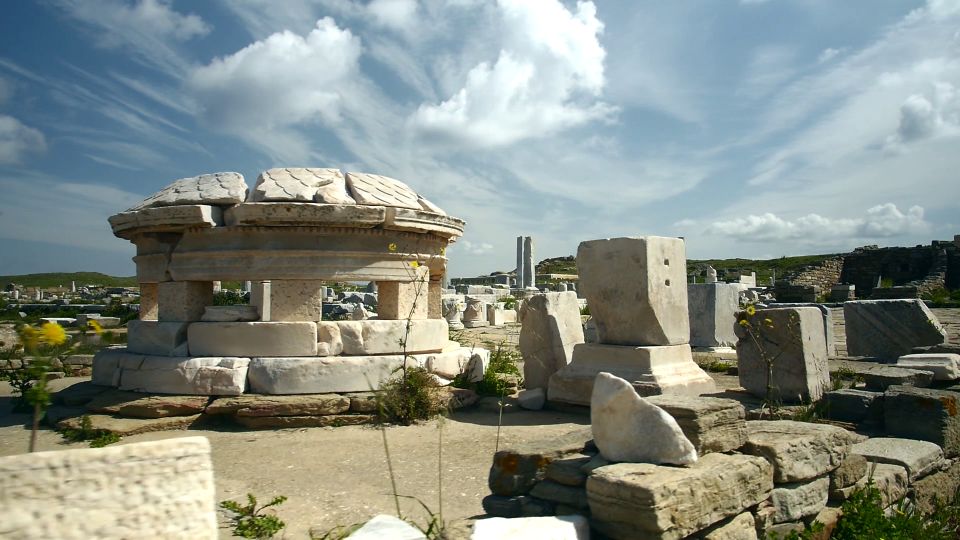
Delos is famous for being sacred and intensely important in the ancient Aegean. The tricky part is that it’s also big, uneven, and best understood with a plan. This tour is designed around a short, efficient window, so you’re not spending your whole day traveling or guessing what to prioritize.
You’ll spend most of the clock on Delos itself, and the route is set up to give you a quick “mental map.” The guided portion focuses on key areas, then you get a chunk of independent walking to take photos, re-check details, or linger where something clicks.
If you only have a half-day, this works well. If you want a slow, museum-first day where you read every sign, you may feel the clock tugging at you.
You can also read our reviews of more boat tours in Delos

Getting there: SeaBus hop, port switch, and the short sail
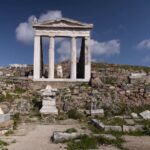
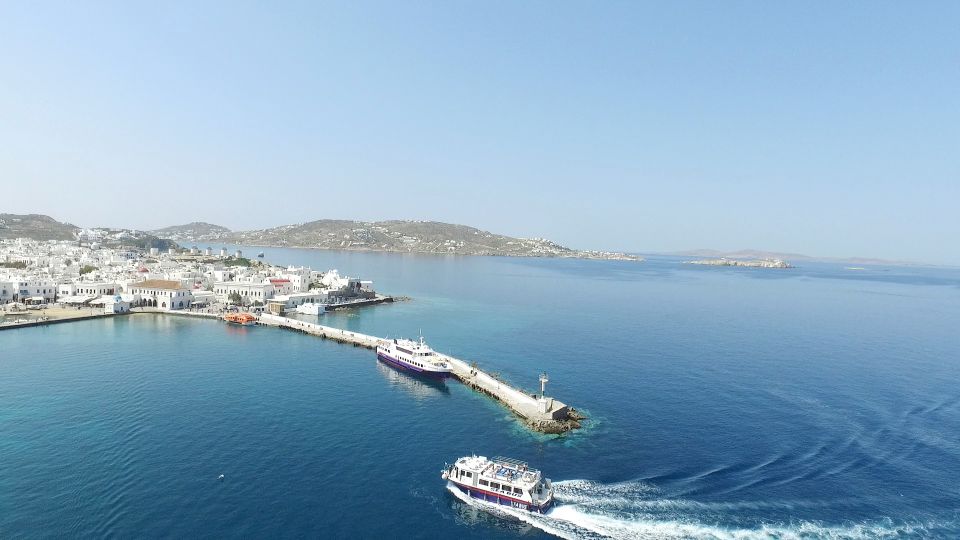
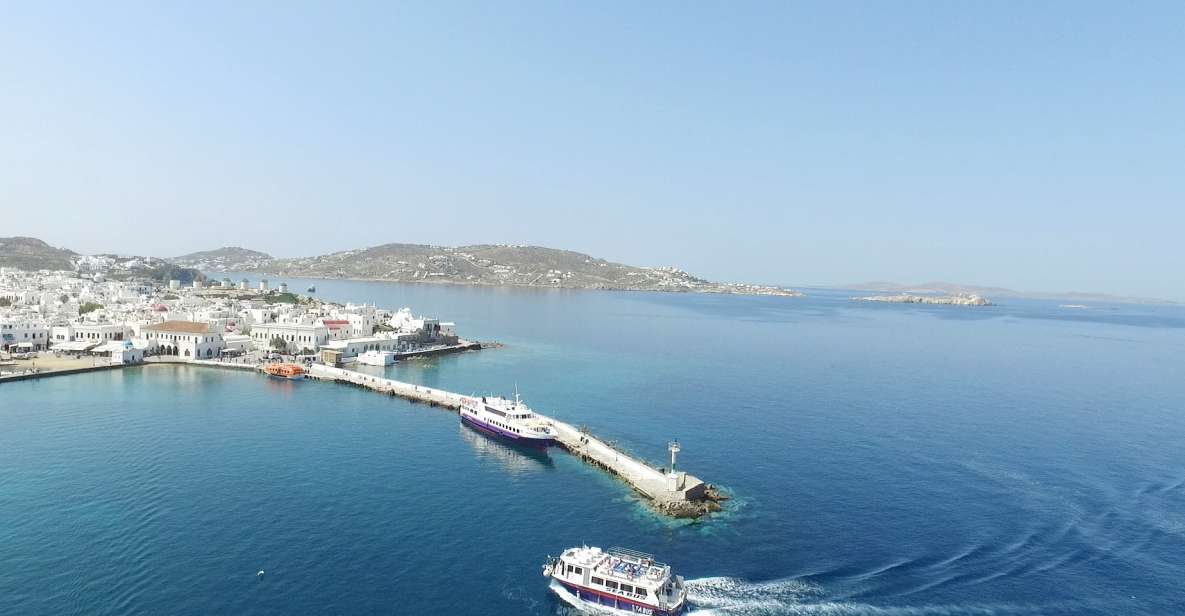
The day starts at Mykonos SeaBus, New Port. From there, you’ll take a quick SeaBus transfer to the old port area, then continue by boat to Delos. The time blocks are short: roughly 10 minutes on the SeaBus/water taxi hop and about 30 minutes on the boat ride.
What that means for you is simple: you’re not trapped on a long transfer. You’ll arrive with enough energy to walk the main route, and the return ride is also only about a half hour, with another short hop back to where you started.
One practical tip: wear shoes you trust. Delos is full of uneven ground and stone steps. Even with a guide holding the route, you’ll still be doing real walking on a historic surface.
The guided circuit on Delos: streets, Dionysus, mosaics, and the Theater
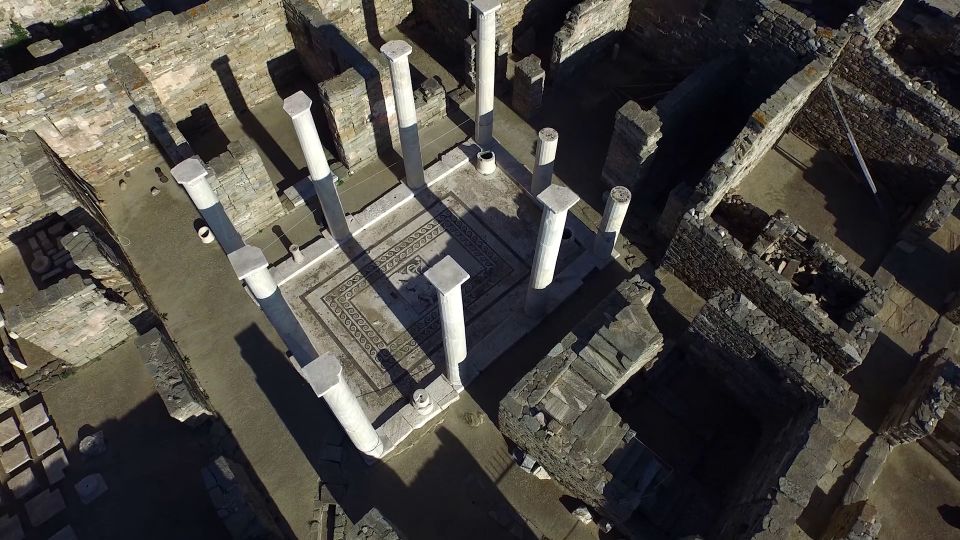
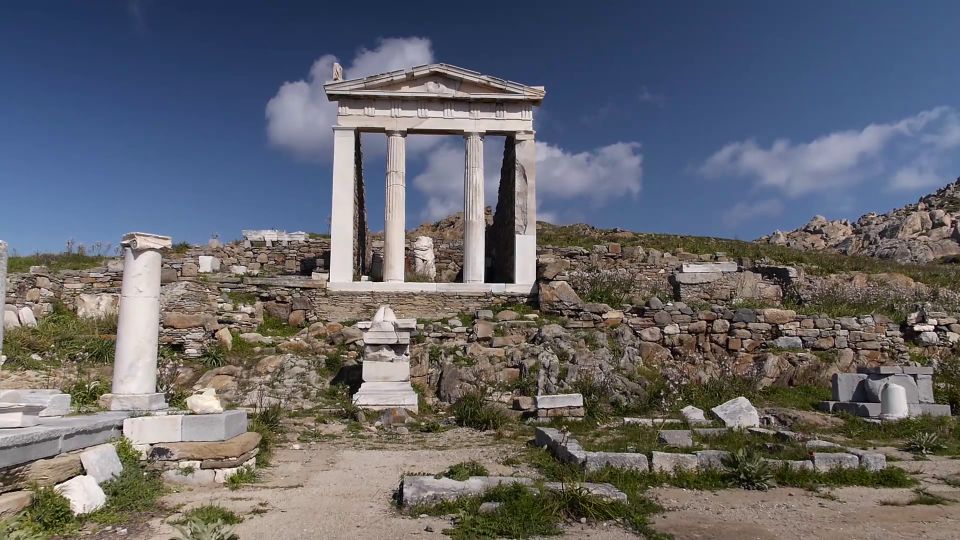
Once you arrive, you’ll get an introduction to the ancient and sacred site. Then your guide leads you through the ruins along narrow city streets, which is the best way to understand how Delos functioned as a lived-in place rather than just a pile of monuments.
This is where the tour’s “value” really shows. A guide turns random ruins into a story you can track. You’ll see the House of Dionysus, and you’ll also hear what makes it special: well-preserved decoration such as mosaics, marble columns, and wall paintings. Those details are the kind you might overlook if you’re just reading signs—or if you’re trying to photograph while walking.
You’ll also pass major landmarks in the urban area, including the Theater of Delos. Even if you don’t know Greek theater architecture, a stop like this gives you scale. It helps you visualize where crowds gathered and how the town’s spaces connected.
Two things to keep in mind here:
- You’ll be moving as a group through a site that isn’t flat.
- The tour includes a wireless tour guide system, which is meant to keep you from constantly craning your neck toward a guide. If conditions aren’t favorable, those devices may not be used as intended.
Main street to sanctuary zone: Apollo, Colossus of Naxians, and the market area
After you’ve walked through the more urban parts of Delos, you’ll head toward the main street area that leads into the sanctuary zone. This is the part that often feels the most dramatic, because the monuments become more monumental and less residential.
You’ll follow a walk past the market area and toward key structures such as the Stoa of Phillipe, the Propylaia, the Colossus of the Naxians, and the Temple of Apollo. If you only memorize one line from this tour, let it be this: Delos isn’t just a city layout. It’s also a sacred landscape with ceremonial spaces that pull the town together.
For me, the benefit of having a guide here is timing and orientation. Even if you love history, trying to decide what’s “important” on your own can slow you down. With a route, you can get the big picture fast—then use your free time to linger on whichever monument you connected with most.
Museum visit vs. free time: how to avoid feeling rushed
This tour includes entrance fees for the archaeological site and the museum of Delos. In theory, that means you’re covered. In practice, what matters is how the day flows once you’re on the ground.
You’ll have a guided portion of about 1.5 hours, and then you’ll get a free exploration window of about 45 minutes. That free time is your buffer, and it’s also where you decide how you want to balance outdoor ruins and indoor museum artifacts.
Here’s the honest heads-up: with a schedule this tight, museum time can shrink if the group is moving slowly or if you’re spending extra time absorbing the mosaics and decorations outside. Some guests have described leaving with less museum time than expected, and that’s the risk when a half-day tour tries to do everything.
If you want the museum to happen the way you imagine it, use a simple strategy:
- During the guided section, pay attention to which artifacts or explanations your guide mentions.
- When free time starts, decide immediately whether you’re going museum-first or ruins-first.
- If you do museum first, use the outdoor route for “spotlight monuments” afterward.
Delos is the kind of place where outdoor details and museum artifacts are connected. But you won’t have endless time to connect both unless you’re deliberate.
Also note: there’s a skip-the-line benefit, but it’s specifically for entrance to the archaeological site. That doesn’t automatically mean you’ll skip anything related to the museum.
Free time strategy: make 45 minutes work for you
That 45-minute window is valuable because it gives you control. This is when you can slow down, take photos without listening for context, or double back to check a mosaic detail you didn’t fully process.
To make it count, start with orientation. Pick your top two priorities during the guided walk—something like the House of Dionysus area and one sanctuary landmark such as Apollo. Then, during free time, stick to your list. It’s easy to wander in Delos because everything looks important.
One more practical idea: if you think you’ll be tempted to read every sign, don’t. Instead, scan for the basics, then look at the decoration and architecture first. The most rewarding parts here are the visible pieces: marble columns, painted surfaces, and mosaic panels—things your eyes catch fast.
If you’re the type who likes to compare viewpoints, you might do best by picking one route loop and doing it twice, rather than trying to cover everything once.
Price and value: what $99 really buys (and what it doesn’t)
At $99 per person for about 4 hours, the price feels midrange for Mykonos-area excursions. The big reason is that your ticket isn’t just transportation. It bundles a lot of “stuff that adds up” on your own.
Included items you’re getting:
- Roundtrip SeaBus ticket and roundtrip Delos boat ticket
- Entrance fees to the archaeological site and the museum (listed as 20 euros per person)
- Live English guide on Delos
- Wireless tour guide system and safety equipment
Not included:
- Food
For value, the key is whether you would otherwise pay separately for transportation, entrances, and a guide. If you’re visiting Delos for the first time, having a guided route that hits the most important clusters typically saves you time and decision-making. You don’t just buy access—you buy direction.
For food, plan ahead. Since it’s an afternoon schedule and the tour duration is only about 4 hours, you don’t want to spend free time searching for something to eat or settling for whatever is nearby. Bring water and a snack if you need one.
Logistics you should know: English guidance, group rhythm, and pace
The tour is advertised with a live guide in English and an audio guide included in English. In practice, you’ll still be relying on your guide’s delivery for the story thread. A few negative experiences mention English clarity and pacing issues, which matters because the day is compact.
This is one reason I suggest you go in with flexible expectations about speed. Delos isn’t a museum where you stand still. It’s ruins in motion—walking, looking, and listening—so even small slowdowns can steal minutes.
Also remember that the wireless devices are provided for free and only to facilitate the guided tour experience when weather conditions are good. If weather is rough or visibility is limited, you may need to rely more on your own viewing and less on audio support.
Who this Delos tour suits best
This tour is a strong fit if you:
- Want the major Delos highlights without managing your own route
- Like mosaics, temple architecture, and the big “anchors” like the theater
- Prefer a guide-led orientation first, then freedom to wander briefly
It’s also a good option if you’re pairing Delos with other Mykonos activities later. The short sail and the 4-hour total duration help you keep your afternoon.
If your travel style is museum-obsessed—meaning you want a long, quiet indoor visit with time to read everything—this might feel tight. The museum is included, but the schedule needs to fit both outdoor ruins and indoor artifacts into a short window.
If your top priority is simply walking at your own pace for hours, you’d probably prefer a less structured option.
Should you book the Afternoon Delos Guided Tour?
I’d book it if you’re coming to Delos for the highlights and you want a guided route that gets you oriented fast. The price makes more sense because entrance fees and transportation are bundled, and the wireless system helps you follow along while you’re walking.
I’d think twice if you know you’ll be disappointed by any possibility of reduced museum time. Because this is a compact half-day, the day’s rhythm can influence how much you see indoors versus outside. If that museum-first balance is crucial to you, go into the tour with a clear plan for your priorities the moment free time begins.
FAQ
FAQ
How long is the Delos tour from Mykonos?
The tour runs for about 4 hours.
Where do I meet for the afternoon Delos guided tour?
Meet at Mykonos SeaBus, New Port, Mikonos 864 00, Greece.
How do you get from Mykonos to Delos?
You take a short SeaBus/water taxi transfer, then a boat ride to Delos. The total boat time is listed at about 30 minutes each way.
Is the guided portion on Delos long?
Yes. The guided tour on Delos is about 1.5 hours.
Do I get time to explore Delos on my own?
Yes. You’ll have about 45 minutes of free time on Delos.
Are entrance fees included?
Yes. Entrance fees for the archaeological site and the museum of Delos are included, listed as 20 euros per person.
Is skip-the-line included?
You get skip-the-line access via a separate entrance, but it applies to the archaeological site entrance.
What language are the guides and audio in?
The live guide is in English, and an audio guide system is included in English.
Is food included in the tour price?
No. Food is not included.
What happens if the tour can’t run because of low participation?
The minimum number of participants required is 8. If the tour is canceled due to low participation, you’ll be informed so you can reschedule or get a refund.