REVIEW · MYKONOS
From Mykonos Cruise Port: Delos Guided Tour
Book on GetYourGuide →Operated by Delos Travel · Bookable on GetYourGuide
Delos feels like time travel, fast. I love the story-first guide and the House of Dionysus mosaics that make the ancient city feel real. The one catch is that the Mykonos-to-Delos start can be a little confusing if your cruise drops you off at a different port than expected.
You’ll spend the day in the open-air archaeology of Delos, with a guided walk through the streets, monuments, and sacred zones. The other big plus: the tour includes roundtrip sea bus and boat transfers plus admission fees, so you’re not scrambling for tickets mid-day.
Just plan for discomfort: Delos is very hot in summer, the walking is steady (and it’s not wheelchair-friendly), and you’ll want to bring what you need for water and sun.
In This Review
- Key Highlights Worth Planning For
- From Cruise Port to Delos: Why the Transfers Matter
- The Boat Ride Experience: Comfort, Timing, and Sun Savers
- Your Delos Guide on the Ground: What You’ll Really Get
- The First Ruin Walk: Streets, Mosaics, and the House of Dionysus
- The Theater of Delos and Urban Monuments: Seeing the Layout
- From Market Street to Sacred Zone: Apollo and the Big Statement Pieces
- Archaeological Museum Time: What’s Included and What to Double-Check
- The 1-Hour Free Time: How to Use It Without Getting Flustered
- Logistics That Can Trip You Up: Ticket Exchanges and Meeting Points
- Price and Value: What You’re Getting for $99
- Who This Delos Tour Fits Best (and Who Should Skip It)
- Quick Booking Decision: Should You Grab This One?
- FAQ
- FAQ
- How long is the Delos guided tour from Mykonos?
- What does the price include?
- Is food included?
- Is the archaeological site skip-the-line included?
- What languages are available?
- When does the English tour run?
- What should I bring?
- Is luggage allowed?
- Is the tour wheelchair-friendly?
- Can I cancel for a refund?
Key Highlights Worth Planning For
- Wireless audio so you can hear the guide while walking (and it’s provided free with the tour)
- Skip-the-line for the archaeological site entrance (but not necessarily for the museum)
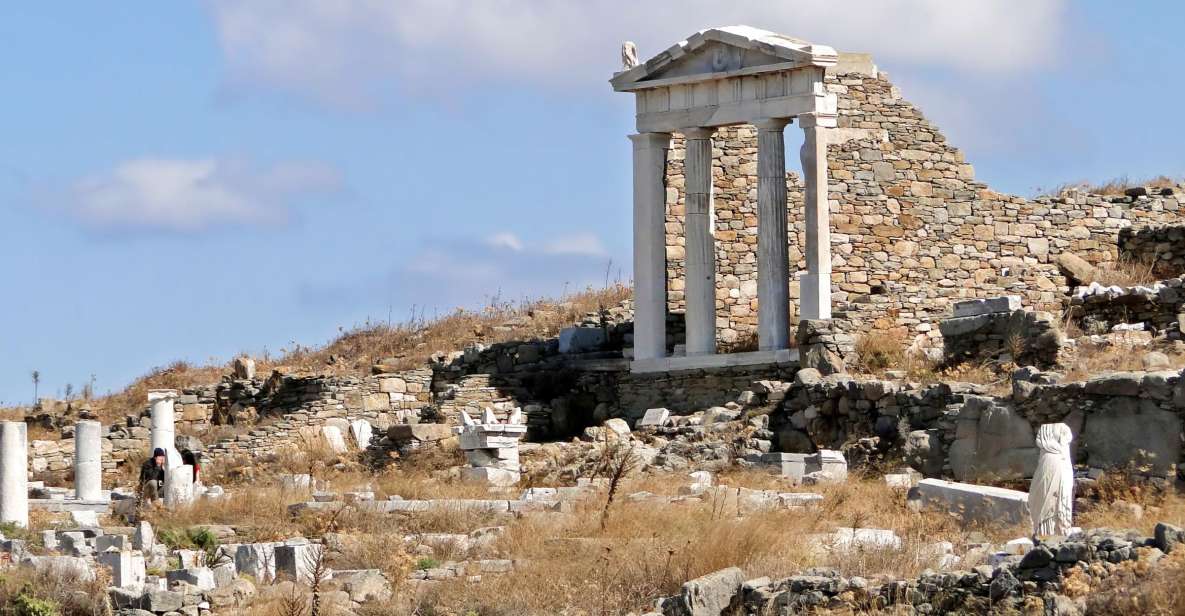
- Delos’ star stops: House of Dionysus, mosaics, marble columns, and wall paintings
- Sanctuary zone walking route: Stoa of Phillipe, Propylaia, Colossus of the Naxians, Temple of Apollo
- A full guided circuit plus a 1-hour window to wander and photograph
- 5-hour format that fits cruise schedules without losing the day to transit
From Cruise Port to Delos: Why the Transfers Matter
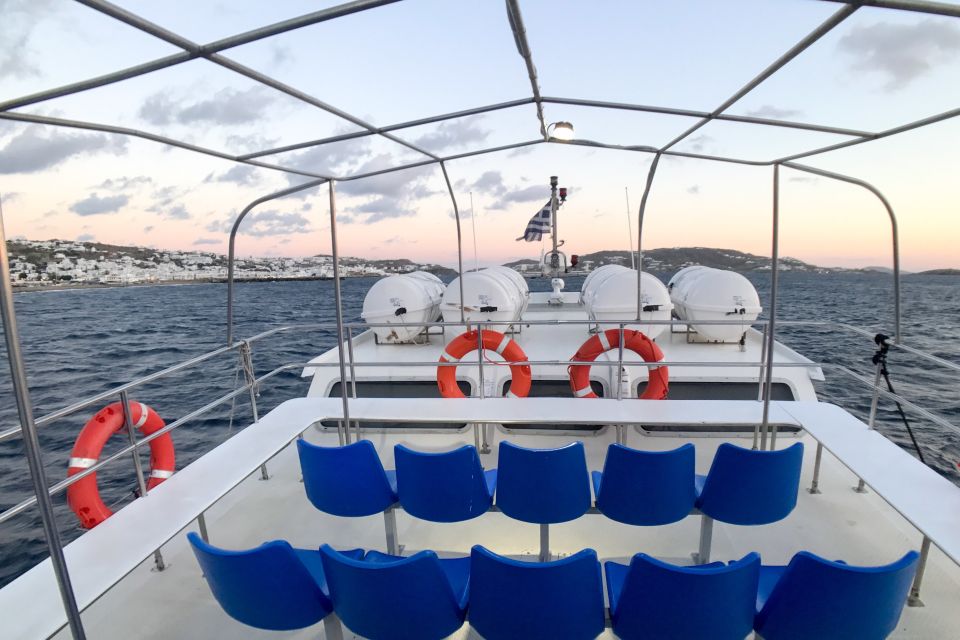
This tour is built around your schedule. You’re not just buying a boat ride. You’re buying a whole chain of getting from the Mykonos cruise area to the old-port ferry dock, then onward to Delos—and back again—within a total of about 5 hours.
The day usually starts with a sea bus connecting the newer port area near the cruise ship disembarkation point to the old port. Sea buses run about every 10 minutes, which helps if you’re running a bit late. Then you take a boat (around 30 minutes) to Delos.
Here’s the practical point: with Delos, the ruins open to you only if you arrive on time. So the transfer steps aren’t minor details. They’re the difference between a smooth start and that tense feeling of chasing a connection in the heat.
You can also read our reviews of more boat tours in Mykonos



The Boat Ride Experience: Comfort, Timing, and Sun Savers
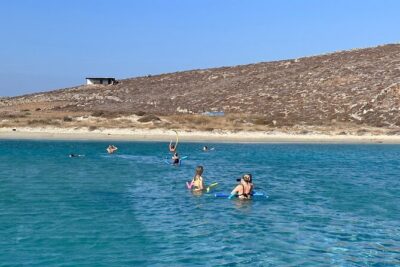
The tour description emphasizes comfort, and that matters here because you’re heading into an open-air site. You’ll make the crossing in a way that’s designed to be manageable from the cruise side, and you’ll have time to settle before the guided portion begins.
On the vessel, cold bottled water and other drinks or snacks are available for purchase. That’s helpful because Delos itself is dry and hot, and you should assume you’ll want more than just one sip once you’re out walking.
Also keep expectations grounded: the itinerary is timed. You’re not on a slow scenic cruise. You’re on a structured route aimed at getting you into the right spots at the right moments.
Your Delos Guide on the Ground: What You’ll Really Get
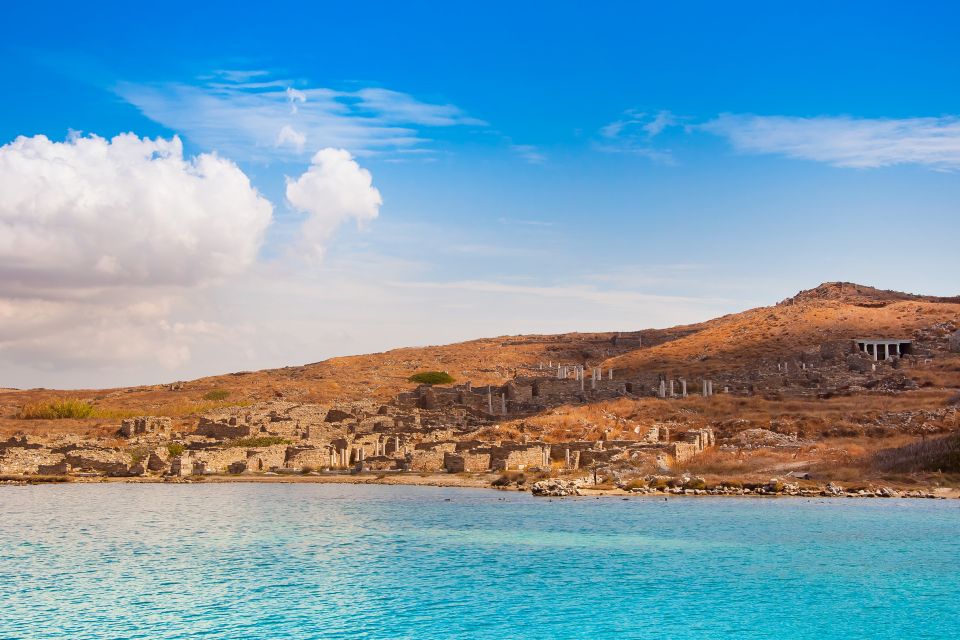
Once you land on Delos, you get an introduction to the ancient and sacred site, then your guide leads you through narrow streets and major monuments with commentary you can follow.
This is where the tour earns its strong reviews. Multiple guides have come up by name in prior departures—Athena, Athanasia, Amaryllis, Johanna, and Joanne/Joanne-like spellings—and the common thread is storytelling that connects the ruins to how people lived, worshipped, and built. You’ll also notice the pacing is built for hearing the explanation while still moving as a group.
And the hearing setup is a big deal. The tour provides a wireless tour guide system. In plain terms: you don’t have to keep turning your head toward the front of the group and hoping you catch the right sentence. You’ll be able to hear the guide even if the terrain or crowding forces the group to spread out.
One more practical note: you’ll be given a wireless device, but treat it carefully. The tour mentions a penalty if it’s lost or damaged.
The First Ruin Walk: Streets, Mosaics, and the House of Dionysus
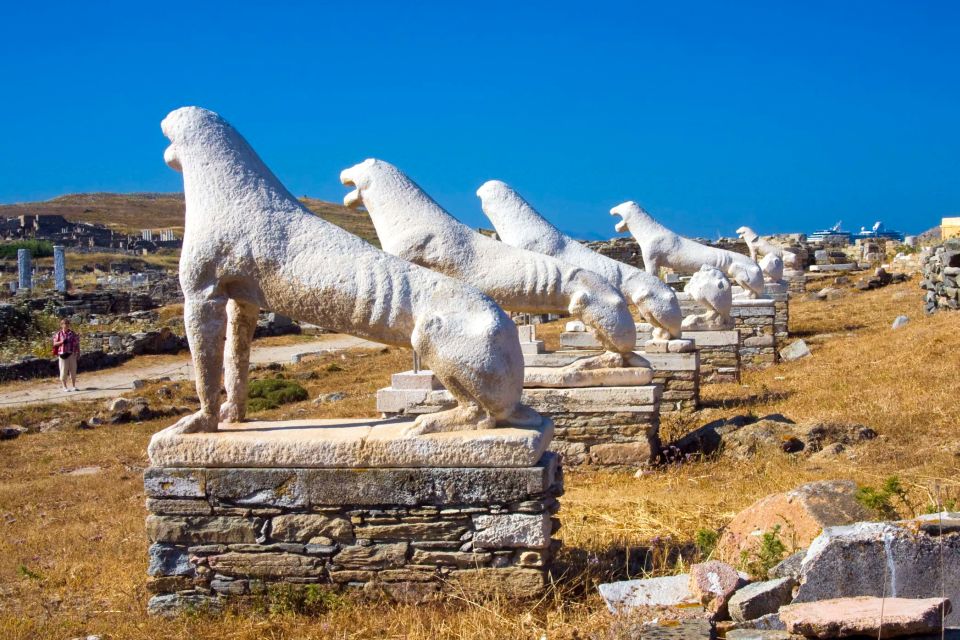
Delos is famous, but what makes this tour satisfying is that it doesn’t just point. It explains what you’re seeing as you move.
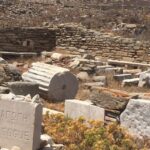
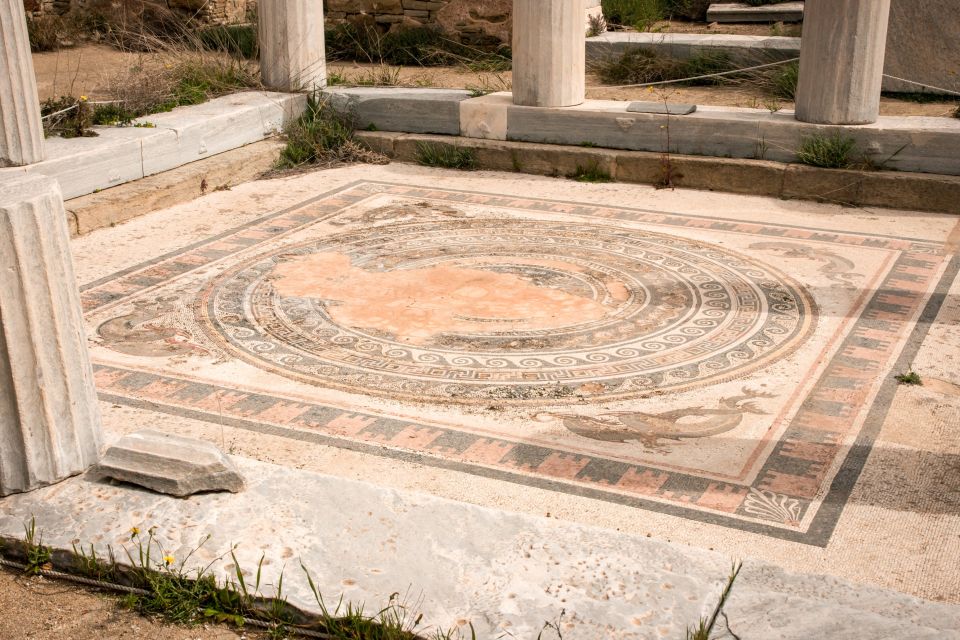
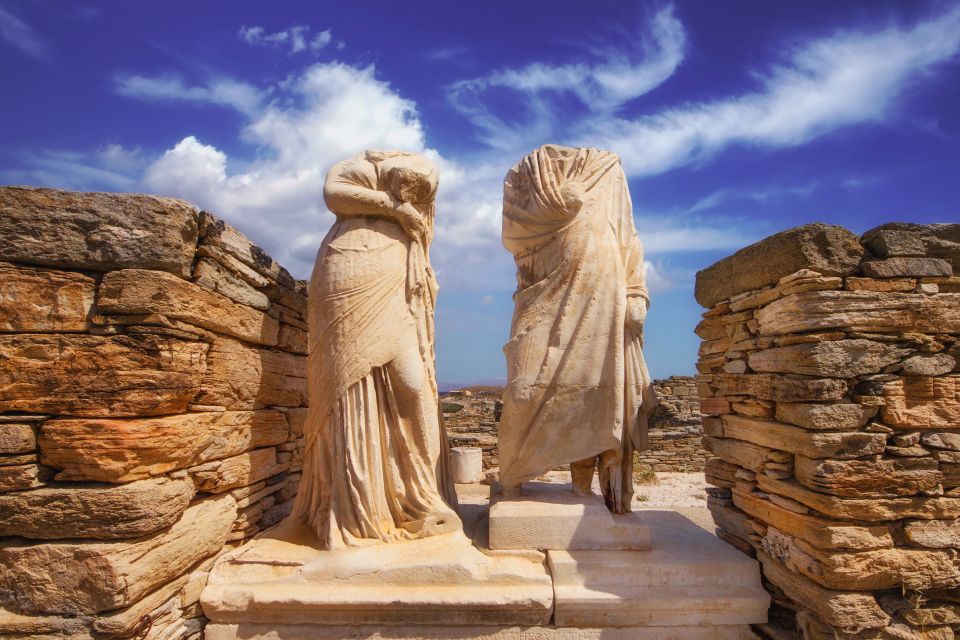
Early on, you’ll head through the urban area and its standout residential and decorative remains. The House of Dionysus is one of the headline stops, and for good reason. The tour highlights exceptional mosaics, well-preserved marble columns, and wall paintings—details that can be hard to appreciate when you’re just wandering on your own.
The way a good guide handles this is simple: instead of rattling dates, the guide helps you understand why these details mattered to people at the time. Even if your Greek history is rusty, the visuals do the heavy lifting, and the commentary helps you connect the dots.
This is also the part where comfortable shoes become non-negotiable. Delos is mostly walking on uneven, uncovered surfaces, and you’re doing it in sun.
The Theater of Delos and Urban Monuments: Seeing the Layout
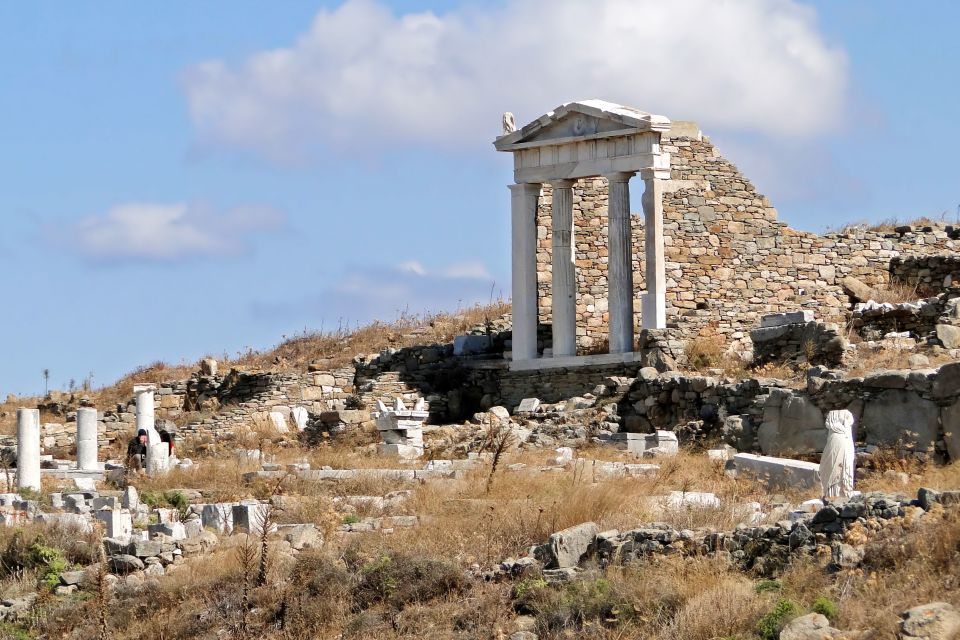
After the residential highlights, you’ll see other monuments in the city area, including the Theater of Delos. This is where you start to understand Delos as a planned space rather than a collection of separate buildings.
A guided walk helps you catch the logic of the place: where gathering spaces sit in relation to streets, how routes connect the urban zone to the sacred zone, and why certain structures feel like anchors even when parts are fragmentary.
You’ll also be moving through narrow city streets, which is a big part of what makes Delos feel special. The ruins don’t just sit there. They make you step into the bones of the old city.
You can also read our reviews of more guided tours in Mykonos




From Market Street to Sacred Zone: Apollo and the Big Statement Pieces
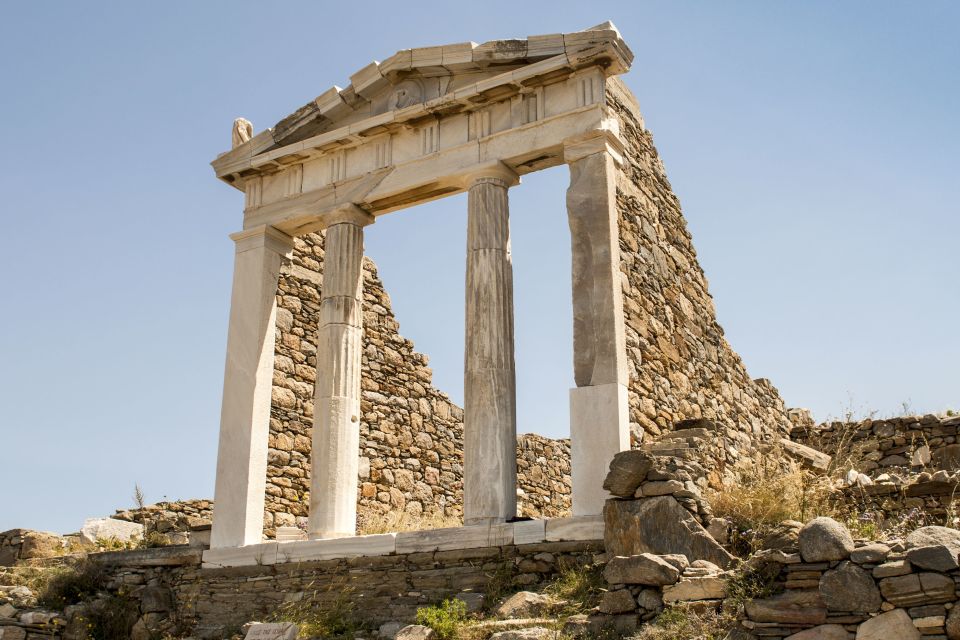
One of the most memorable segments is the walk along the main street to the market and the sanctuary zone. This is where the tour shifts from daily-life remnants to the monumental religious side of Delos.
Expect stops that include:
- the Stoa of Phillipe
- the Propylaia
- the Colossus of the Naxians
- the Temple of Apollo
These aren’t just names. On site, they help you see scale and purpose. The stoa structures frame movement and shade; the Propylaia works like a ceremonial gateway; and the Temple of Apollo is a focal point that gives you something to orient your photos and your mental map around.
If you care about architecture or sacred design, this section is the payoff. If you’re traveling with kids or friends who get impatient, a good guide also helps by spotting details people might miss—like alignments, materials, and how the ruins were meant to be experienced.
Archaeological Museum Time: What’s Included and What to Double-Check
Your tour includes entry fees to the archaeological site and the museum of Delos. In theory, that means the museum visit is part of the value package.
That said, museum hours and openings can change. Some past departures have reported the museum being closed for long stretches, with later updates suggesting re-openings in certain periods. Because of this, I recommend you verify the museum status close to your visit date. Don’t assume it’s always open on the day you go.
If it is open, the museum adds context to what you’re walking through outdoors. If it’s not, you still get the core Delos walking circuit, but your best plan is to use your free hour thoughtfully on the ruins instead of waiting for indoor time.
The 1-Hour Free Time: How to Use It Without Getting Flustered
After the guided portion, you’ll have about 1 hour of free time. This is where you can turn the guided tour into your own Delos experience.
The smart way to use the hour:
- Go back to your favorite photo spots and take a second look in better light
- Find a quieter corner to read signage slowly
- If you felt rushed during the tour due to crowds or heat, use this hour to slow down
Because this is Delos, there’s another reality: it’s an open-air archaeological site, so you’ll want to treat it like one. That means no touching things and staying where it’s allowed. A respectful visit is a better one, and it helps you enjoy the place longer.
Logistics That Can Trip You Up: Ticket Exchanges and Meeting Points
Here’s the honest part. The most common frustration isn’t the ruins. It’s the start.
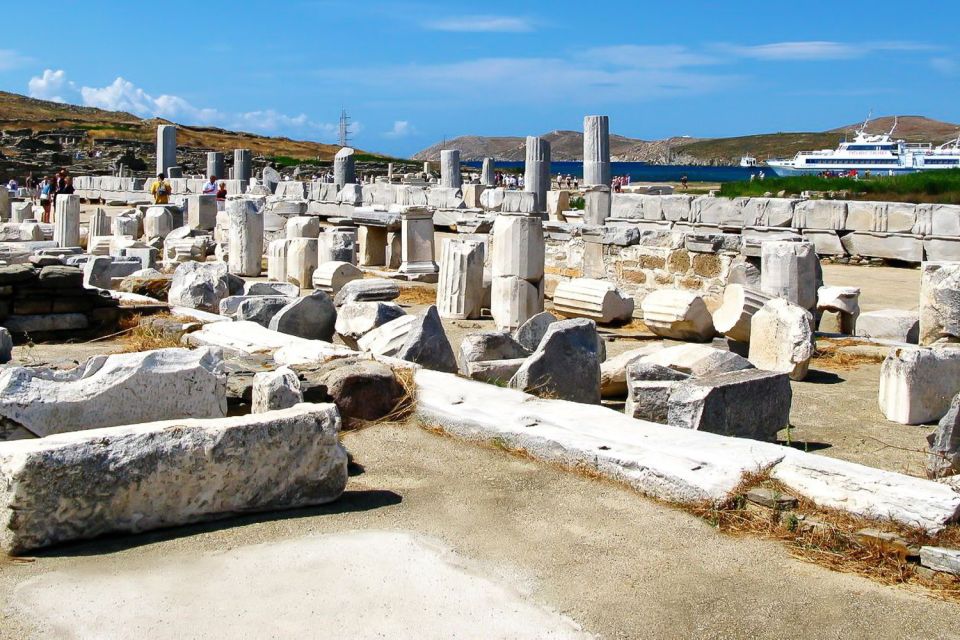
Multiple guides and departures have highlighted that the instructions for getting from the cruise ship area to the exact dock for your boat can be unclear—especially when cruise ships tender rather than dock at the expected place. Some people reported wasting an hour because they were sent toward the wrong port area first, then had to correct course.
So I suggest you do this:
- Read your confirmation details carefully for your specific departure option
- Plan extra buffer time for getting to the correct dock or ticket exchange point
- If you see kiosks and ticket windows, use them early rather than waiting until the last minute
Once you’re on the Delos side, the flow usually becomes easier. But you want to protect your energy in those first moments.
Price and Value: What You’re Getting for $99
At $99 per person, the tour is priced like a cruise-friendly guided excursion, not a bare-bones ticket. The value comes from the package:
- Roundtrip sea bus and boat tickets
- Entry fees to the archaeological site and the museum (the tour notes 20 euros per person for admission)
- A guide on Delos
- Wireless audio
- Safety equipment
Food is not included, but you can buy drinks and snacks on the vessels. That helps keep the tour price from ballooning on food, which is one less decision under the sun.
If you already know you want a guided experience at Delos, this package makes sense because it bundles the most expensive friction points: transfers and admissions.
If you’re traveling with someone who hates guided walking, the experience may feel like too much structure. In that case, you might consider a more flexible approach. But for most people doing Delos for the first time, guidance is exactly what makes the site land.
Who This Delos Tour Fits Best (and Who Should Skip It)
This tour is best for you if:
- you want a structured Delos day that fits a cruise schedule
- you like history when it’s explained clearly while you’re standing in front of the evidence
- you’d rather pay for the transfers and show up than figure out everything yourself
It’s not a great fit if:
- you need wheelchair access (the tour isn’t suitable for wheelchair users)
- you’re likely to melt in heat without pacing or water
- you have a very late arrival window and can’t tolerate possible confusion around meeting points
One more fit check: the minimum number of participants is 8. That matters because in rare cases, the tour could be canceled for low participation.
Quick Booking Decision: Should You Grab This One?
If you’re visiting Delos from Mykonos and you want the most value in the time you have, this is one of the smarter ways to do it. The ruins are the star, but the guide and wireless audio are what turn a walk through rubble into a place you can actually understand.
I’d book it if you’re ready for steady walking, bring sun protection, and you’re comfortable double-checking the correct port and ticket exchange instructions for your departure option. If that logistics part sounds stressful, give yourself extra buffer time before the first transfer and consider arriving early to the port area.
FAQ
FAQ
How long is the Delos guided tour from Mykonos?
The tour lasts about 5 hours.
What does the price include?
It includes roundtrip sea bus and boat tickets, entry fees to the archaeological site and museum of Delos (20 euros per person), a guide on Delos, a wireless tour guide system, and safety equipment.
Is food included?
No. Food is not included, but you can buy cold bottled water and other drinks or snacks on the vessels.
Is the archaeological site skip-the-line included?
Yes, skip-the-line applies to the entrance to the archaeological site.
What languages are available?
The tour offers French, Italian, Spanish, and English.
When does the English tour run?
The English option runs daily at 10 AM and 5 PM.
What should I bring?
Bring your passport or ID card, comfortable shoes, sunglasses, a sun hat, water, and a face mask or protective covering.
Is luggage allowed?
No luggage or large bags are allowed.
Is the tour wheelchair-friendly?
No, it is not suitable for wheelchair users.
Can I cancel for a refund?
Yes. You can cancel up to 24 hours in advance for a full refund.