Greek cooking with a view is hard to beat. This hands-on Mykonos class teaches you how to actually make classic dishes like tzatziki, cheese pies, spinach pies, dolmades, and how to get the gyros meat plus bake your own pita-bread. I especially loved the step-by-step cooking pace and how much food you end up with, plus the outdoor setting with sweeping bay views that makes the whole meal feel like an event.
The main thing to consider is transport. It’s listed as included, but for some remote areas or villas, you may need to pay cash to the driver on the spot, and one review flagged a last-minute extra fee issue—so it’s smart to confirm your exact pickup point ahead of time.
In This Review
- Key highlights to look for
- What You’ll Cook in a 3-Hour Greek Food Crash Course
- Outdoor Kitchen by the Bay: Why the Setting Isn’t Just Pretty
- Chef Nico’s Teaching Style: Funny, Patient, and Built for Real Results
- The Menu in Motion: From Tzatziki to Pies to Dolmades
- Gyros Meat and Pita-Bread: The Skill You’ll Actually Use Later
- Lunch as the Payoff: Group Meal, Lots of Food, and Wine
- Price and Logistics: Is $143.79 Worth It on Mykonos?
- Who Should Book This Hands-On Class (And Who Might Not)
- Should You Book Mykonos Cooking Class Hands-On?
- FAQ
- What dishes do you learn to make?
- How long is the cooking class?
- Is the class private?
- What’s included in the price?
- Does the tour include transportation?
- Where does the class meet?
- What language is the class offered in?
- Is there a mobile ticket?
- Is the experience outdoors?
- Can I cancel for a refund?
Key highlights to look for
- Real cooking, not watching: you actively prep, assemble, and learn techniques you can repeat at home
- Outdoor kitchen and bay views: cooking with an island panorama is part of the charm
- Gyros mastery: you learn gyros meat plus baking pita-bread
- Plenty of food: multiple dishes, served as a group meal at the end
- Chef-led, easy instructions: past sessions highlighted clear steps, humor, and patience
- English guide support: the class is offered in English, with in-person coaching
What You’ll Cook in a 3-Hour Greek Food Crash Course
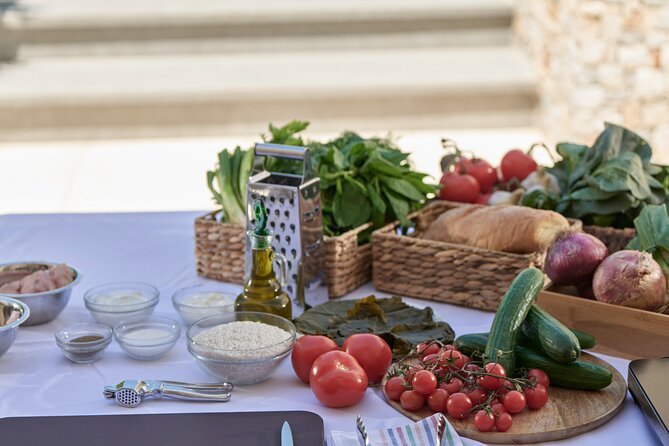
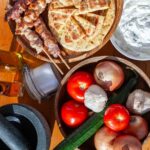
This class is built around a tight, practical goal: leave with Greek cooking skills you can use right away. In about three hours, you’ll make several recognizable favorites, including tzatziki, cheese pies, spinach pies, and dolmades. Then you’ll put your “comfort food” skills to work on the stars of the street-food world: gyros meat and baking your own pita-bread.
What makes this more valuable than a typical demo is the focus on technique. You’re not just learning what something tastes like—you’re learning how the steps connect. If you’ve ever tried to copy recipes at home and ended up with bland sauce or uneven pies, this is the kind of class that helps you understand where things go right (and where they go wrong).
Based on accounts from past groups, instructors also tend to add extra components when time and timing allow. That means you might see additional items like meatballs or chicken and pork souvlaki-like preparations, alongside the core menu. Even without the extras, the core lineup alone is a strong set of Greek “greatest hits” you can reuse for future dinners.
You can also read our reviews of more cooking classes in Mykonos

Outdoor Kitchen by the Bay: Why the Setting Isn’t Just Pretty
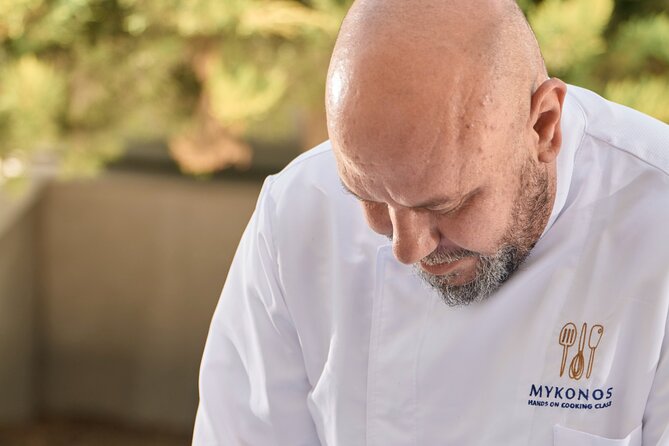
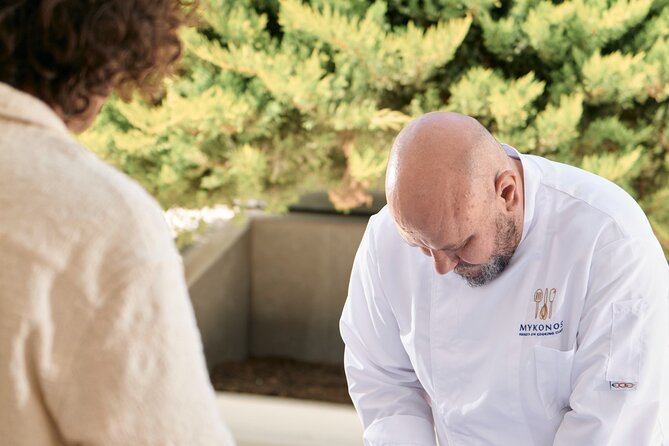
The cooking happens outdoors, on an open-air setup that many people describe as being up on a hill with amazing views over the bay. That sounds like a vibe detail, but it actually matters for your experience. When you’re working with dough, herbs, and hot surfaces, good air and a relaxed atmosphere make the time feel smoother instead of cramped.
There’s a weather catch: the experience requires good weather. If conditions are poor, it may be canceled and you’ll be offered a different date or a full refund. So pack for the real Mykonos day—think layers you can adjust, plus shoes that work on uneven outdoor ground.
Also, plan to be comfortable with an active, slightly messy reality. Past groups praised the light, supportive energy when things got a bit messy or someone made a mistake. That’s the right mindset. You’re learning. You’re cooking. If you want a sterile, quiet meal tour, this isn’t that.
Chef Nico’s Teaching Style: Funny, Patient, and Built for Real Results
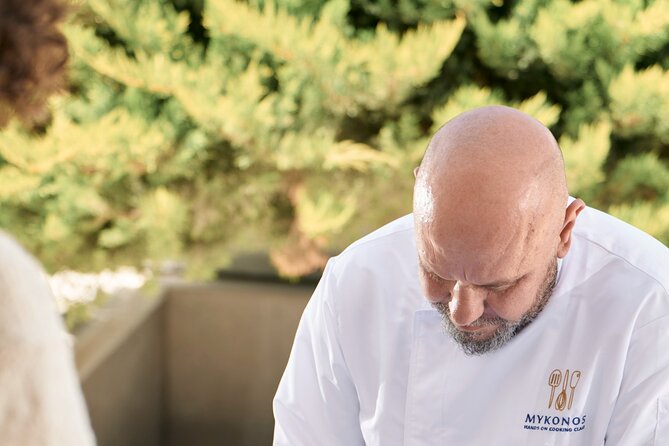
Many classes here are led by chefs who mix structure with good humor, and names like Chef Nico and Chef Nikolas show up in feedback. The common thread: clear, step-by-step guidance that sticks even if you’re new to Greek cooking.
What I like in this teaching style is how it balances technique with fun. You’ll likely get practical tips that sound small—until you try them later. For example, people highlighted how instruction stayed easy to follow, with helpful tricks and an atmosphere that encouraged questions. That means you’re not stuck guessing when your dough behaves differently than the photo.
The best part is that the class feels forgiving. If you overwork something, under-season something, or fumble a step, you’re not shut down. The vibe stays upbeat, and you leave with a better understanding of what to adjust next time.
If you’re traveling with teens or a mix of skill levels, this teaching style is a big plus. One host named Ava earned praise for being especially great with teen girls, which suggests the group energy stays inclusive, not intimidating.
The Menu in Motion: From Tzatziki to Pies to Dolmades
Here’s how the food learning typically feels: you’ll move through several dishes that teach different cooking skills. Tzatziki is about freshness and balance—yogurt, grated cucumber, herbs, and the kind of seasoning sense that you can’t always pick up from a recipe. When you make it yourself, you start to understand texture and thickness, not just flavor.
The pie section—cheese pie and spinach pie—teaches dough handling and filling management. Past groups emphasized easy-to-follow instructions and fresh ingredients. That matters because pies are where tiny changes show up fast: too much moisture can ruin the texture, and under-seasoning makes fillings taste flat.
Then come the dolmades, which are basically a master class in patience and assembly. This is where you learn how to roll and how to keep things consistent so they cook evenly. Even if you’ve never made dolmades before, this class gives you the process so you don’t rely on guesswork.
Finally, the class builds toward gyros and pita-bread, which ties it all together into the Greek street-food payoff.
Gyros Meat and Pita-Bread: The Skill You’ll Actually Use Later
If you’re a fan of gyros, this is the part you’ll remember. Instead of just learning how to build a sandwich, you learn the base: gyros meat and pita-bread. That’s huge because pita texture changes everything—getting it right is what separates good gyros from the forgettable kind.
Making pita yourself also changes how you think about cooking heat and timing. You see how the dough behaves and how the process needs attention. Once you’ve done it once, you’re better at judging doneness than you are when you only follow a baking chart.
And you don’t just end up with one small bite. The class is described as producing a lot of food, and many people mention that there’s plenty to eat. Some also noted carrying away extra food after the group meal. That’s a practical win: you get a proper lunch and you might get leftovers for later.
You can also read our reviews of more tours and experiences in Mykonos


Lunch as the Payoff: Group Meal, Lots of Food, and Wine
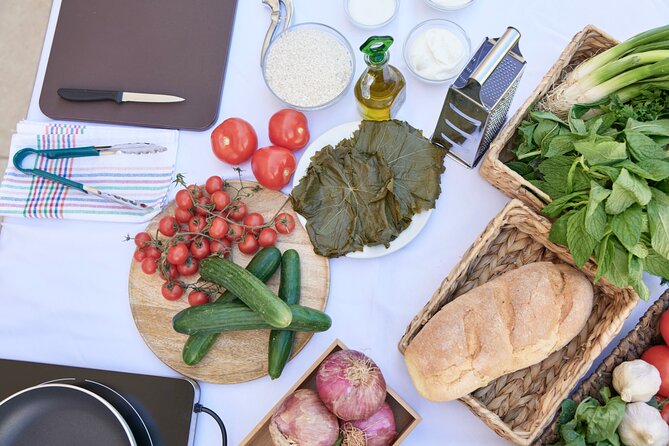
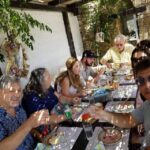
The class wraps with an end-of-session meal where you eat what you made together. People specifically mention eating as a group and enjoying wine while cooking. That’s not just a drink detail; it’s part of the social rhythm of the experience. It turns the class from a checklist into something more relaxed.
Expect a feast. Feedback repeatedly notes the amount of food and how delicious it was, with ingredients described as fresh. For me, that’s the real value of a cooking class in a destination: you’re paying for the chance to leave with an experience and a meal that feels worth the time.
So if you’re hungry when you arrive, bring that energy. If you’re not hungry, you might be after the first dish. Either way, you’ll want to save room for the end, because that’s where you taste the full result.
Price and Logistics: Is $143.79 Worth It on Mykonos?
At $143.79 per person for about three hours, this class can feel pricey at first glance. But here’s the math that makes it more reasonable: you’re getting kitchen equipment, an English in-person guide, a lunch built around multiple dishes, and transport support from many parts of the island.
Also, it’s private for your group. That’s not guaranteed in every cooking class, and it changes how much attention you can get while you’re working. More hands-on time usually means more learning, and that’s what you want from a class like this.
Now for the caution. Transportation is described as included in collaboration with Transfers In Mykonos, but certain remote places require extra cash payment to the driver. The list includes areas like Elia, Kalafatis, Agrari, Panormos, Super Paradise, Paradise & Kanalia, plus some remote villas or apartments. One review also reported an added $70 fee and a communication breakdown. You can avoid most headaches by doing one simple thing: confirm your exact pickup address with the operator after booking, especially if you’re not staying in central Mykonos Town.
The meeting point address is also specific: MYKONOS COOKING CLASS, ΜΥΚΟΝΟΥ-ΑΝΩ ΜΕΡΑΣ 46, Klouvas 846 00, Greece. If you’re prone to arriving late or getting turned around, treat that as your anchor point and plan to be early.
Who Should Book This Hands-On Class (And Who Might Not)
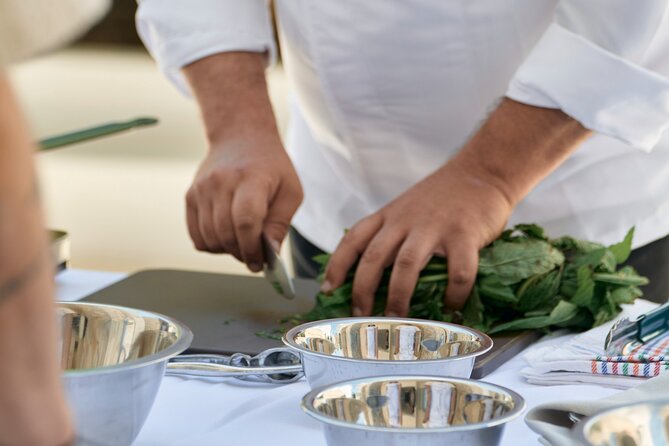
This experience is best for people who want to do more than taste. If you like food education you can repeat at home—making sauces, pies, rolled items, and pita—this fits nicely. It also works well for couples and small groups because it’s private, so you cook together rather than being one voice in a huge crowd.
You’ll also enjoy it if you like an outdoor setting and don’t mind weather-based variables. If you hate the idea of cooking outdoors, you might feel uncomfortable if the weather shifts. But if you’re traveling with a flexible attitude, the views and the open-air setup are a big part of the charm.
If you’re extremely sensitive to logistics, confirm transport carefully. The core transport note is clear enough, but remote areas can create extra payment needs on the spot. Spending five minutes verifying pickup details can save you a lot of stress.
Should You Book Mykonos Cooking Class Hands-On?
I’d book it if you want a practical, Greek-food-focused experience that ends with real lunch and real skills. The recipe lineup—tzatziki, pies, dolmades, plus gyros meat and pita-bread—gives you a strong set of things to cook again later, not just a one-time tasting.
Before you click confirm, do two quick checks:
- Verify pickup for your exact hotel or villa area, since some remote locations may require extra cash to the driver.
- Keep an eye on weather expectations because the class depends on good weather.
If those two points are handled, this is one of the more satisfying ways to spend a half day on Mykonos—hands-on, social, and focused on food you’ll actually want to make again.
FAQ
What dishes do you learn to make?
You’ll learn classic Greek dishes including tzatziki, cheese pies, spinach pies, dolmades, and how to prepare gyros meat and bake pita-bread.
How long is the cooking class?
It runs for about 3 hours.
Is the class private?
Yes. It’s listed as a private tour/activity, so only your group participates.
What’s included in the price?
Included are kitchen equipment, lunch, and an in-person guide in English.
Does the tour include transportation?
Transportation is described as included, with a transfer partner handling pickups/drop-offs for many hotels and areas. Some remote places or villas may require an extra cash payment to the driver.
Where does the class meet?
The meeting point is MYKONOS COOKING CLASS, ΜΥΚΟΝΟΥ-ΑΝΩ ΜΕΡΑΣ 46, Klouvas 846 00, Greece.
What language is the class offered in?
The class is offered in English.
Is there a mobile ticket?
Yes, it’s listed as a mobile ticket.
Is the experience outdoors?
The class is described as outdoors in the open kitchen setting, and it also notes that it requires good weather.
Can I cancel for a refund?
The experience offers free cancellation up to 24 hours before the start time for a full refund.
If you want, tell me where you’re staying (area or hotel) and I’ll help you sanity-check whether you’re likely in the included transfer zone or one of the remote areas that may cost extra.